In This Article
There’s something particularly heartbreaking about discovering a gorgeous fragrance that makes your skin burn, itch, or break out in angry red patches. If you’ve got sensitive skin, you already know this story too well. You spray on what seems like the perfect scent at the department store counter, only to find yourself frantically washing it off an hour later because your neck is on fire and your wrists look like you’ve been attacked by invisible mosquitoes.
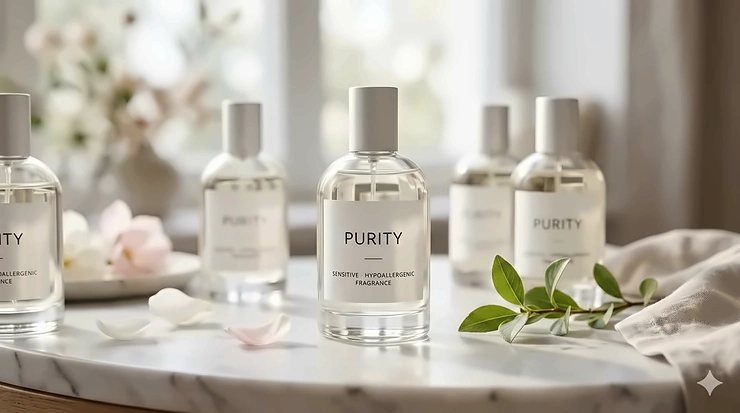
Here’s the thing though: having reactive skin doesn’t mean you need to smell like absolutely nothing for the rest of your life. The fragrance industry has finally caught up with reality, and there’s a whole world of perfume for sensitive skin out there that won’t make you choose between smelling amazing and having comfortable skin. These aren’t your grandmother’s medicinal-smelling “hypoallergenic” options that smell like hand sanitizer mixed with regret.
Research from the American Academy of Dermatology indicates that fragrance is among the most common causes of allergic contact dermatitis, affecting millions of people who just want to feel confident and smell good. The good news? Clean beauty brands have cracked the code on creating sophisticated, long-lasting scents using gentle fragrance sensitive skin formulations that exclude common allergens without sacrificing that je ne sais quoi factor.
In this guide, we’re breaking down the top 7 non-irritating perfume options that actually work for sensitive skin types. We’ve done the research, read hundreds of customer reviews, and identified fragrances that combine hypoallergenic ingredients with genuinely beautiful scent profiles. Whether you’re looking for vanilla warmth, fresh citrus notes, or skin-like musks, you’ll find something here that won’t betray your skin.
Quick Comparison Table
| Product | Key Features | Price Range | Best For | Rating |
|---|---|---|---|---|
| Skylar Vanilla Sky | Hypoallergenic, vegan, cruelty-free | $78-$90 | Gourmand vanilla lovers | 4.5/5 |
| PHLUR Vanilla Skin | Transparent ingredients, no allergens | $96-$99 | Minimalist vanilla seekers | 4.6/5 |
| Ellis Brooklyn SCI FI | Paraben-free, phthalates-free | $100-$105 | Unique vanilla-citrus fans | 4.4/5 |
| Clinique Happy | Dermatologist-tested, allergy tested | $65-$75 | Classic citrus-floral | 4.3/5 |
| Juliette Has A Gun Not a Perfume | Single-ingredient, allergen-free | $34-$150 | Skin-scent enthusiasts | 4.7/5 |
| The 7 Virtues Vanilla Woods | Hypoallergenic, fair-trade vanilla | $32-$94 | Cozy vanilla-amber fans | 4.5/5 |
| Lavanila Pure Vanilla | Natural, botanical oils | $36-$70 | Clean beauty advocates | 4.2/5 |
💬 Just one click – help others make better buying decisions too! 😊
Top 7 Perfumes for Sensitive Skin: Expert Analysis
1. Skylar Vanilla Sky Eau de Parfum
When it comes to perfume for sensitive skin that doesn’t compromise on complexity, Skylar Vanilla Sky stands at the top of the pack. This California-inspired fragrance brand was actually founded by Cat Chen after her daughter experienced allergic reactions to traditional perfumes, so they understand the sensitive skin struggle on a personal level.
The scent itself opens with cappuccino and vanilla notes before settling into caramelized cedar base notes. What makes it special is the 50mL/1.7 fl oz formulation that’s completely hypoallergenic, vegan, and cruelty-free. Skylar excludes parabens, phthalates, sulfates, and synthetic dyes from all their formulations, working with a toxicologist to ensure safety.
Customer feedback highlights the longevity (4-6 hours on skin) and how it layers beautifully with other Skylar scents. One reviewer mentioned wearing it daily for office work without triggering her usual fragrance headaches. The price sits around $78-$90, positioning it as a mid-range option that delivers luxury without the luxury price tag.
Pros:
✅ Dermatologist-tested and hypoallergenic formulation
✅ Long-lasting wear without reapplication
✅ California-inspired scent that feels modern and fresh
Cons:
❌ Scent may be too sweet for those preferring lighter fragrances
❌ Higher price point compared to drugstore options
2. PHLUR Vanilla Skin Eau de Parfum
PHLUR Vanilla Skin has become something of a cult favorite in the clean perfume space, and for good reason. This 50mL fragrance features an intoxicating blend of pink pepper, cashmere wood, and sandalwood that creates what the brand calls a “kaleidoscope of spice and intrigue” around classic vanilla.
What sets PHLUR apart is their radical ingredient transparency. Every single component is listed on their website, which is practically unheard of in the fragrance industry. They work with master perfumers to create scents that are as sophisticated as luxury fragrances but without the irritating additives.
Reviews from customers with sensitive skin consistently mention zero irritation even after all-day wear. The fragrance evolves beautifully on the skin, starting slightly sugary before developing into a creamy, musky vanilla. At $96-$99 for the full size, it’s an investment, but many users report it’s become their daily signature scent. The brand also offers travel sizes and body mists for those wanting to test before committing.
Pros:
✅ Complete ingredient transparency (rare in fragrance)
✅ Complex scent profile that evolves throughout the day
✅ Master perfumer-crafted formulations
Cons:
❌ Premium pricing may not fit all budgets
❌ Sweetness level can feel cloying to some users
3. Ellis Brooklyn SCI FI Eau de Parfum
For those seeking a truly unique gentle fragrance sensitive skin option, Ellis Brooklyn SCI FI offers something completely different in the vanilla category. Founded by former New York Times beauty columnist Bee Shapiro when she was pregnant and couldn’t find non-toxic luxury fragrances, this brand merges sophistication with safety.
The 50mL/1.7 oz formulation blends bergamot and bitter orange with green tea, pink freesia, cashmere woods, and vanilla beans. It’s like if vanilla decided to go on an adventure and came back wearing a leather jacket. The brand is PETA-certified vegan and cruelty-free, paraben-free, and phthalates-free.
Customer experiences highlight how this performs as both a standalone scent and a layering fragrance. One user with eczema mentioned wearing it for months without a single flare-up. The longevity is impressive at 6-8 hours, though projection stays relatively close to the skin. Priced around $100-$105, it positions itself firmly in the luxury clean beauty category.
Pros:
✅ Unique scent profile unlike typical vanilla fragrances
✅ Made in small batches in upstate New York
✅ Safe for eczema-prone skin (per customer reviews)
Cons:
❌ Higher price point than mass-market options
❌ Green tea note may not appeal to everyone
4. Clinique Happy Eau de Parfum
Sometimes you can’t beat a classic, and Clinique Happy has been a dermatologist-recommended staple since 1997. This 3.4 fl oz citrus-floral fragrance was created specifically with sensitive skin in mind, featuring ruby red grapefruit, bergamot, Hawaiian wedding flower, and spring mimosa.
As a dermatologist-guided brand, Clinique’s commitment to safety starts with skincare science and extends to their fragrance line. Happy is allergy-tested and formulated to be gentle on all skin types. The scent profile is cheerful and uplifting, perfect for daytime wear to the office or weekend brunches.
Long-time users praise its reliability and how it never triggers reactions even after years of daily wear. At $65-$75 for the large size, it’s more accessible than many hypoallergenic options. One customer mentioned using it for over a decade without a single irritation issue. The fragrance wears close to the skin and lasts about 3-4 hours, requiring midday reapplication for all-day scent.
Pros:
✅ Dermatologist-tested and backed by medical expertise
✅ Accessible price point for quality formulation
✅ Proven track record since 1997
Cons:
❌ Shorter wear time compared to eau de parfums
❌ Scent may feel dated to those preferring modern fragrances
5. Juliette Has A Gun Not a Perfume
This is where fragrance gets truly minimalist. Juliette Has A Gun Not a Perfume is made from a single ingredient: Cetalox (also called Ambroxan). That’s it. No top notes, no heart notes, no base notes. Just pure molecular fragrance that adapts to your skin’s natural chemistry.
Because it contains literally one synthetic molecule, it’s completely allergen-free, making it the ultimate non-irritating perfume option. Available in sizes from 0.25 fl oz travel spray to 3.3 fl oz, with prices ranging from $34 to $150, there’s an option for every budget.
The scent is difficult to describe because it smells slightly different on everyone. Most people detect musky, woody, and slightly sweet notes that feel like “your skin but better.” Some users become nose-blind to it on themselves but receive compliments from others. It layers beautifully with scented lotions or other perfumes. Customer reviews consistently mention zero irritation even on extremely reactive skin.
Pros:
✅ Single-ingredient formula eliminates allergen concerns
✅ Adapts to individual skin chemistry
✅ Range of sizes and price points
Cons:
❌ Subtle scent may disappoint those wanting projection
❌ Some users can’t detect it on themselves (nose-blindness)
6. The 7 Virtues Vanilla Woods Eau de Parfum
The 7 Virtues Vanilla Woods brings ethical sourcing into the hypoallergenic perfume conversation. This 50mL/1.7 oz fragrance features organic, fair-trade vanilla from Madagascar blended with pear, rose, caramel, and amber notes. The brand’s “Make Perfume Not War” mantra reflects their commitment to supporting families in nations rebuilding after conflict.
The formulation is hypoallergenic and cruelty-free (PETA-certified), made with 22% fragrance oils compared to the typical 10-15% in most eau de parfums. It’s free from phthalates, parabens, sulfates, and formaldehyde. The scent opens with fresh pear before developing into warm vanilla and caramel with smoky amber undertones.
Customer experiences highlight the impressive longevity (8+ hours) and how the scent evolves from bright to cozy throughout wear. Users with fragrance sensitivities report no headaches or skin reactions. Priced at $32-$94 depending on size, it offers excellent value for a clean fragrance with this level of sophistication. The bottle’s nearly clear liquid may turn golden-caramel over time due to the natural ingredients.
Pros:
✅ Ethically sourced with social impact mission
✅ Higher fragrance oil concentration for longevity
✅ Natural color changes show ingredient authenticity
Cons:
❌ Pear note can dominate for some users
❌ Very sweet profile may not suit all preferences
7. Lavanila Pure Vanilla Eau de Parfum
Lavanila Pure Vanilla has been a pioneer in healthy fragrance since 2007, long before clean beauty became trendy. Available in 1.7 oz and 3.4 fl oz sizes ($36-$70), this natural perfume option blends Madagascar vanilla with creamy tonka bean and soft heliotrope.
The brand uses organic sugar cane alcohol and essential oils crafted by master natural perfumers. It’s hypoallergenic and particularly gentle for sensitive skin, with customers reporting it works even for those with fragrance allergies. The scent is soft, slightly powdery, and wears very close to the skin.
Long-term users appreciate how it layers beautifully with other products and works as both a standalone fragrance and a sweetening agent for other perfumes. One customer mentioned wearing it daily for fall and winter without any irritation. The wear time is moderate at 4-6 hours, with the scent settling into a warm vanilla-almond drydown. The formulation includes skin-soothing ingredients like goji berry powder and olive leaf extract.
Pros:
✅ Pioneer brand with 20 years of clean beauty expertise
✅ Contains skin-beneficial botanical ingredients
✅ Affordable entry point into natural perfumes
Cons:
❌ Scent projection is minimal (very close to skin)
❌ Some find initial spray smells too soapy
What Makes a Perfume “Sensitive Skin Friendly”?
Understanding what actually makes a perfume safe for reactive skin helps you make smarter choices beyond just the products we’ve recommended. Not all hypoallergenic perfume claims are created equal, and some marketing terms can be misleading.
The Science Behind Fragrance Sensitivity
According to scientific research published in Contact Dermatitis journals, up to 4.5% of the adult population may have contact allergy to one or more fragrances, though many can tolerate certain formulations without experiencing reactions. Your skin’s sensitivity isn’t weakness—it’s actually your immune system being hypervigilant about protecting you from potential threats.
When fragrance molecules penetrate the skin barrier, sensitive skin can interpret them as invaders and launch an inflammatory response. This manifests as redness, itching, burning, or even contact dermatitis. The perfume industry has evolved significantly since ancient civilizations first used fragrances for ceremonial and personal purposes, and modern formulations are designed to work with your skin’s natural defenses rather than triggering them.
Ingredients to Avoid
Traditional perfumes often contain up to 100+ different ingredients hidden under the single word “fragrance” on labels. According to dermatological research, common culprits include cinnamal (cinnamon-derived), oakmoss, limonene, linalool, and geraniol. The American Academy of Dermatology notes that these natural and synthetic compounds appear in fragrance-related allergic reactions affecting 0.7% to 2.6% of populations in clinical studies.
High alcohol concentrations (70-90% in traditional perfumes) strip your skin’s protective barrier, creating microscopic openings for irritants to penetrate deeper. Essential oils, despite being “natural,” remain highly concentrated and can trigger reactions in sensitive individuals. Even supposedly gentle ingredients like lavender, citrus peels, and rose can provoke responses.
What to Look For Instead
Seek out dermatologist-recommended scents with transparent ingredient lists that specify every component. Hypoallergenic certifications mean products have been tested on sensitive skin populations. Alcohol-free or reduced-alcohol formulations (under 50%) maintain skin barrier integrity better.
Single-note fragrances or those with fewer than 15 total ingredients reduce your exposure to potential allergens. Vegan and cruelty-free certifications often correlate with cleaner formulations, though they’re not guarantees of hypoallergenicity. PETA-certified products typically avoid problematic musks and animal-derived ingredients that can irritate.
How to Choose the Right Perfume for Sensitive Skin
Selecting a fragrance-free alternative or gentle option requires more strategy than just grabbing the first “hypoallergenic” bottle you see. Here’s a systematic approach that actually works.
Read Beyond the Marketing Claims
“Unscented” doesn’t mean fragrance-free—it often indicates masking fragrances were added to cover up base smells. “Natural” and “organic” don’t automatically equal safe for sensitive skin, since many natural ingredients like bergamot oil can cause photosensitivity. “Dermatologist-tested” is better than nothing, but look for “dermatologist-recommended” or “clinically tested on sensitive skin.”
The ingredient list tells the real story. If you see “fragrance,” “parfum,” or “aroma” without further specification, that’s a red flag. Reputable brands will break down exactly what comprises their scent.
Consider Fragrance Concentration Levels
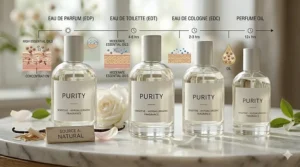
Eau de Parfum contains 15-20% fragrance oils, Eau de Toilette has 5-15%, and Eau de Cologne sits at 2-4%. For sensitive skin, starting with lower concentrations (EDT or lighter) reduces your exposure to potential irritants. You can always apply more, but you can’t un-apply something that’s already causing a reaction.
Perfume oils with no alcohol base can be excellent gentle fragrance sensitive skin options, though they typically wear closer to the skin. Body mists and hair mists offer the lightest concentration and are good testing grounds before investing in full-strength formulations.
Patch Test Everything
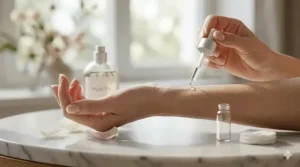
Before committing to a full bottle, conduct a proper patch test. Apply a small amount to the inside of your wrist or behind your ear. Wait 48-72 hours, checking for any redness, itching, or irritation. If you react, you’ve saved yourself from a full-body breakout.
Many brands now offer discovery sets or sample sizes precisely for this reason. PHLUR, Skylar, and The 7 Virtues all provide sampler collections so you can test multiple scents safely. This also helps you figure out which specific fragrance families work best with your skin chemistry.
Layer Strategically
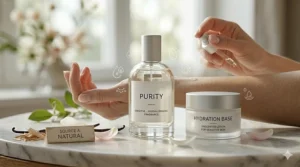
If you find an unscented lotion that works well for your skin, you can layer a gentle fragrance on top of it. The lotion creates a protective barrier and helps the scent last longer. This technique is particularly useful if you want to use natural perfume options with shorter wear times.
Start with fragrance-free body products (moisturizer, deodorant, hair products) so your chosen perfume doesn’t clash or combine into an overwhelming chemical cocktail. Your skin is already working hard to tolerate one scented product—don’t ask it to handle five simultaneously.
Understanding Different Fragrance Families for Sensitive Skin
Not all scent categories are created equal when it comes to skin compatibility. Some fragrance families naturally contain fewer allergens than others.
Vanilla and Gourmand Scents
Vanilla-based fragrances (like Skylar Vanilla Sky, PHLUR Vanilla Skin, and The 7 Virtues Vanilla Woods) tend to be gentler because vanilla itself is less irritating than many other fragrance components. Gourmand scents featuring caramel, tonka bean, and warm spices create that “yummy” feeling without the harsh chemicals often found in citrus or floral blends.
The key is ensuring the vanilla comes from quality sources. Natural vanilla extract or synthetic vanillin that’s been tested for skin safety both work well. Watch out for “vanilla” perfumes that achieve their scent through dozens of other ingredients rather than actual vanilla compounds.
Musky and Woody Notes
Skin-like musks (as found in Juliette Has A Gun Not a Perfume) using molecules like Cetalox or Iso E Super are often hypoallergenic because they’re single synthetic molecules rather than complex blends. These create that “your skin but better” effect without triggering reactions.
Woody notes from sandalwood, cedar, or amber can be soothing for sensitive skin when used in proper concentrations. They tend to have anti-inflammatory properties and feel grounding rather than sharp. The 7 Virtues and Ellis Brooklyn both utilize these notes effectively in their formulations.
Citrus and Fresh Scents
Citrus fragrances (like Clinique Happy) walk a fine line. While uplifting and clean-smelling, citrus oils can cause photosensitivity reactions when skin is exposed to sunlight. If you choose a citrus-forward scent, apply it to clothing rather than directly on skin, or reserve it for evening wear.
Fresh aquatic notes and clean laundry scents typically use synthetic molecules that are less likely to irritate than natural essential oils. Skylar’s Salt Air and Ellis Brooklyn’s Salt both utilize marine notes successfully for sensitive skin.
Floral Fragrances
Traditional floral perfumes pose the highest risk for sensitive skin because flower essences contain complex allergens. Rose, jasmine, and lily can all trigger reactions. However, some modern formulations use synthetic floral notes that mimic the scent without the allergens.
If you love florals, opt for single-flower fragrances rather than complicated bouquets. This makes it easier to identify which specific flower might be problematic if you do react. PHLUR’s Missing Person features a gentle floral profile that many sensitive-skin users tolerate well.

Application Techniques That Minimize Irritation
How you apply your perfume matters almost as much as which one you choose. Proper application techniques can prevent reactions even with borderline-problematic scents.
Strategic Pulse Point Selection
Traditional advice tells you to spray wrists, neck, and behind ears. For sensitive skin, reconsider this approach. The neck and décolletage have thinner skin that absorbs fragrance more readily (and thus reacts more easily). Behind the knees and inner elbows have better circulation but less reactive skin.
Hair holds fragrance longer than skin without the irritation risk. Spray your brush or hands lightly, then run through your hair. This creates a beautiful scent cloud when you move without direct skin contact. Just ensure your chosen fragrance won’t dry out your hair strands.
The Spray-and-Walk Technique
Instead of spraying directly onto skin, try the spray-and-walk method: Spray your perfume into the air in front of you, then walk through the mist. This distributes fragrance evenly in a much lighter application that’s less likely to overwhelm sensitive skin.
For targeted application, spray onto a cotton ball or soft fabric, then dab gently onto desired areas. This gives you more control over placement and amount. Never rub your wrists together after application—this crushes the fragrance molecules and can increase irritation.
Clothing Application
Applying perfume to your clothes rather than skin eliminates direct contact while still allowing you to enjoy the scent. Target areas include the inside hem of your jacket, the collar of your shirt (away from neck contact), or even the inside lining of your purse.
Be cautious with delicate fabrics like silk or satin, as alcohol-based perfumes can stain. Test on an inconspicuous area first. This technique works especially well with the Ellis Brooklyn and Lavanila formulations that have lower alcohol content.
Timing Your Application
Apply perfume after moisturizing but before dressing. This gives the alcohol time to evaporate before fabric contact. If you’re using a natural perfume option with shorter wear time, reapply as needed rather than doubling up initially. Multiple light applications throughout the day cause less irritation than one heavy spray.
For maximum longevity without reapplication, try using a matching body lotion or unscented moisturizer underneath your perfume. The emollients create a grippy surface that holds fragrance longer without requiring excessive spraying.
The Role of Clean Beauty in Sensitive Skin Fragrance
The clean beauty movement has revolutionized options for those seeking non-irritating perfume formulations. Understanding what “clean” actually means helps you separate legitimate products from greenwashing.
Defining Clean Fragrance
Clean fragrance doesn’t have an official regulatory definition, which allows brands to use the term loosely. Reputable clean brands like Skylar, PHLUR, and Ellis Brooklyn define it as formulations free from known harmful ingredients: parabens, phthalates, sulfates, synthetic dyes, and undisclosed “fragrance” components.
The best clean brands work with third-party toxicologists to create their exclusion lists. Skylar, for instance, partnered with toxicologists to develop their ingredient policy that intentionally omits thousands of potentially harmful substances. This goes far beyond legal requirements.
Transparency as a Trust Signal
Ingredient transparency separates true clean brands from pretenders. PHLUR lists every single ingredient on their website—something almost unheard of in traditional perfumery where formulas are considered trade secrets. This allows people with specific allergies to make informed choices.
The 7 Virtues goes a step further, making visible through the bottle itself where their fragrance oils were sourced from and the aromatherapy benefits. This radical transparency builds consumer confidence that nothing harmful is hiding in the formulation.
Sustainability Meets Sensitivity
Many hypoallergenic brands also prioritize environmental sustainability because the same harmful chemicals that irritate skin also damage ecosystems. The 7 Virtues uses sustainably sourced ingredients that support families in post-conflict regions. Ellis Brooklyn commits to carbon-neutral shipping and partners with Ecocert-certified suppliers.
Lavanila has been a 20-year leader in healthy beauty, planting one tree through The Nature Conservancy for every order placed on their website. These practices ensure that the ingredients reaching your skin haven’t been contaminated with pesticides or other chemicals during production.
Certifications That Matter
PETA Bunny and Leaping Bunny certifications verify cruelty-free claims through independent auditing. EWG (Environmental Working Group) verification means ingredients have been screened against their database of hazardous chemicals. National Eczema Association seals indicate products have been tested on extremely sensitive, eczema-prone skin and passed.
When you see multiple legitimate certifications on a product (like The 7 Virtues’ PETA and Leaping Bunny certifications), it signals the brand submitted to rigorous third-party testing rather than just self-declaring their products safe.
Budget-Friendly vs. Luxury Options: What’s Worth the Splurge?
The price range for perfume for sensitive skin varies dramatically, from $30 travel sizes to $150 luxury bottles. Understanding what you’re actually paying for helps you allocate your budget wisely.
Entry-Level Excellence
Lavanila’s travel rollerball ($36) and The 7 Virtues mini sizes ($32) provide genuine quality at accessible price points. These aren’t watered-down versions—they contain the same formulations as full-size bottles in more portable formats. Starting here lets you test without financial commitment.
Clinique Happy’s full 3.4 oz size at $65-$75 delivers exceptional value for a dermatologist-tested formulation from a trusted brand. Given its longevity in the market (since 1997), you’re paying for proven reliability rather than trendy packaging.
Mid-Range Sweet Spot
The $90-$100 range (Skylar Vanilla Sky, PHLUR Vanilla Skin, Ellis Brooklyn SCI FI) represents the sweet spot for clean fragrance. You’re paying for transparent ingredient sourcing, ethical manufacturing, and sophisticated scent composition by master perfumers. These bottles typically offer better longevity and more complex scent evolution than drugstore options.
At this price point, brands can afford higher-quality ingredients like organic Madagascar vanilla (The 7 Virtues) or exclusive synthetic molecules (PHLUR). The packaging is also more substantial, with recyclable materials and refillable options starting to appear in this category.
Luxury Investment Pieces
Juliette Has A Gun Not a Perfume at $150 for 3.3 oz positions itself as a luxury option, but you’re paying for the unique single-ingredient formulation and the brand prestige. For sensitive skin, this represents the ultimate minimalism—you literally cannot get a simpler fragrance.
Whether luxury is worth it depends on your priorities. If you’ve struggled for years to find anything that doesn’t cause reactions, the allergen-free guarantee of Not a Perfume might justify the premium. If you simply want something nice that won’t irritate, mid-range options deliver equivalent safety at lower costs.
Cost Per Wear Analysis
Consider how often you’ll actually use the fragrance. A $90 bottle you wear daily for a year costs $0.25 per use. A $30 bottle that sits unused because the scent doesn’t excite you wastes 100% of your investment. Sometimes spending more on something you’ll genuinely love proves more economical than buying multiple cheaper options you abandon.
Fragrance layering also extends value. If you invest in one signature scent and layer it with unscented moisturizers, you can make a smaller bottle last longer than constantly switching between multiple fragrances.

Natural vs. Synthetic: Debunking the Myths
One of the biggest misconceptions about perfume for sensitive skin is that “natural” automatically equals “better” or “safer.” The reality is far more nuanced.
Why Natural Doesn’t Always Mean Non-Irritating
Many plant-derived essential oils contain potent allergens. Lavender oil, tea tree oil, citrus peel extracts, and rose absolute can all trigger contact dermatitis despite being 100% natural. The concentration matters enormously—a tiny amount might be fine, but higher concentrations in perfumes often exceed skin tolerance thresholds.
About 2,500 different fragrance ingredients are currently used in perfume composition, with at least 100 known to be contact allergens. Many of these are natural compounds. The “natural” label provides no protection against reactions.
The Case for Clean Synthetics
Synthetic fragrance molecules like Cetalox (used in Juliette Has A Gun Not a Perfume) can actually be safer for sensitive skin than natural alternatives. Because they’re single, pure molecules created in laboratories, they contain no contaminating allergens that might hide in plant extracts.
Master perfumers can craft synthetic notes that mimic natural scents without the allergenic compounds. PHLUR and Ellis Brooklyn both use a blend of natural and synthetic ingredients, selecting whichever version of each note proves gentler on skin. This pragmatic approach beats naturalistic ideology.
Quality Matters More Than Origin
Whether natural or synthetic, the quality and purity of ingredients determine safety. A high-quality synthetic vanilla molecule from a reputable supplier will outperform a contaminated natural vanilla extract every time. Cheap synthetics from unknown manufacturers pose just as much risk as questionable botanical ingredients.
This is why brand reputation and transparency matter so much. Companies like Skylar that publish their ingredient policies and work with toxicologists ensure quality regardless of whether components are natural or synthetic. You’re trusting the brand’s testing and sourcing, not just the ingredient origin.
Living with Fragrance Sensitivity: Lifestyle Adjustments
Beyond choosing the right perfume, managing fragrance sensitivity requires some lifestyle adaptations. These changes make daily life more comfortable while still allowing you to enjoy scent.
Creating a Fragrance-Safe Environment
Your home should be a sanctuary where you control exposure. Switch to fragrance-free laundry detergent, as scented laundry products leave residue on clothes that continuously releases fragrance chemicals against your skin. Use unscented cleaning products—the “fresh linen” smell isn’t worth the rash.
Be cautious with scented candles and air fresheners, which many people with perfume sensitivity also react to. If you love home fragrance, try reed diffusers with single essential oils you’ve tested, or simply open windows for natural freshness. Your skin will thank you for reducing overall fragrance load.
Communicating Your Needs
Don’t feel embarrassed about asking colleagues to avoid heavy perfumes in shared office spaces. Most workplaces now recognize fragrance sensitivity as a legitimate accommodation request. Phrase it positively: “I have a fragrance sensitivity—would you mind keeping scents light in our shared space?”
For social situations, apply your own gentle fragrance sensitive skin option before events. This creates a scent buffer that can help mask other people’s perfumes while signaling to others that you do care about smelling nice. People are often more respectful when they realize you’re not anti-fragrance, just sensitive.
Building Your Safe Scent Wardrobe
Instead of one signature scent, develop a small rotation of 2-3 hypoallergenic options for different occasions. Use lighter scents (like Clinique Happy) for daytime office wear. Reserve warmer options (The 7 Virtues Vanilla Woods) for evenings and weekends. Keep a subtle skin scent (Not a Perfume) for situations where you want just a hint of fragrance.
This rotation prevents olfactory fatigue (becoming nose-blind to your scent) while giving you options that match your mood and setting. Store your perfumes in cool, dark places away from bathroom humidity to maintain their quality and skin-safety over time.
When to See a Dermatologist
If you experience reactions to multiple supposedly hypoallergenic fragrances, schedule a consultation with a board-certified dermatologist. They can perform patch testing to identify your specific allergens, which helps you make much more targeted product choices. You might discover you’re allergic to a preservative or carrier ingredient rather than fragrance itself.
Persistent reactions—rashes that don’t heal within a week, spreading irritation, or symptoms that worsen over time—warrant professional evaluation. Don’t suffer unnecessarily when medical solutions exist. Dermatologists can also prescribe barrier repair creams that make your skin more resilient to mild fragrance exposure.
FAQ: Your Perfume for Sensitive Skin Questions Answered
❓ What is the difference between hypoallergenic and fragrance-free perfume?
❓ Can I wear perfume if I have eczema or dermatitis?
❓ How long does hypoallergenic perfume typically last on skin?
❓ Are expensive perfumes better for sensitive skin than affordable ones?
❓ What should I do if I react to a supposedly hypoallergenic perfume?
Conclusion: Finding Your Signature Scent Safely
Navigating the world of perfume for sensitive skin doesn’t have to feel like walking through a minefield anymore. The seven options we’ve explored—from Skylar’s California-inspired vanilla to Juliette Has A Gun’s revolutionary single-molecule scent—prove that having reactive skin no longer means choosing between fragrance and comfort.
The fragrance industry has finally recognized that millions of people need gentle, transparent formulations that don’t compromise on sophistication. Whether you’re drawn to the ethical sourcing of The 7 Virtues, the radical transparency of PHLUR, or the dermatologist-tested reliability of Clinique Happy, there’s a hypoallergenic perfume that matches both your scent preferences and your skin’s needs.
Remember that finding your perfect non-irritating perfume is a journey, not a one-time purchase. Start with sample sizes or discovery sets when possible. Patch test everything for 48-72 hours before committing. Pay attention to not just immediate reactions but also how your skin feels after hours of wear. Your ideal fragrance should make you feel confident and comfortable from first spray to final dry-down.
The investment in gentle fragrance sensitive skin options pays dividends beyond just smelling nice. You’re protecting your skin’s health, avoiding the inflammation that accelerates aging, and building a sustainable beauty routine you can maintain long-term. Every time you reach for a thoughtfully formulated perfume instead of a chemical-laden department store option, you’re choosing self-care over settling.
Your sensitive skin isn’t a limitation—it’s simply asking you to be more intentional about what you put on it. With the right products and approach, you can smell absolutely amazing while keeping your skin happy, healthy, and reaction-free.
Recommended for You
- 7 Best Long-Lasting Perfume Women Under 50 in 2026
- 7 Best Dior Sauvage Alternatives 2026 – Budget Colognes Under $50
- Chanel No 5 vs Coco Mademoiselle: 7 Key Differences (2026 Guide)
Disclaimer: This article contains affiliate links. If you purchase products through these links, we may earn a small commission at no additional cost to you.
✨ Found this helpful? Share it with your friends! 💬🤗
