In This Article
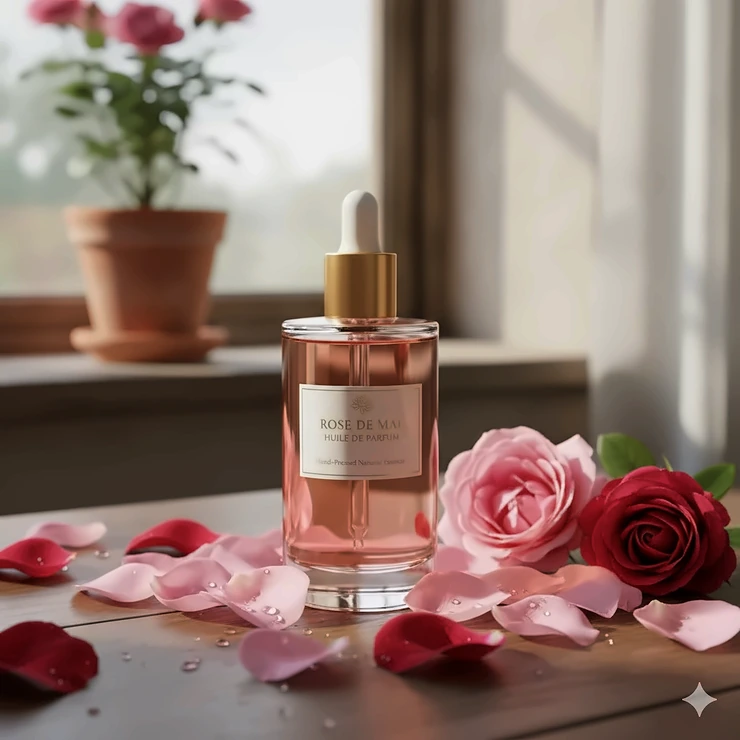
Rose perfume oil is a concentrated, alcohol-free fragrance. Its rose notes come from distilled rose otto, rose absolute, or a blend of natural and aroma-chemical rose materials, suspended in a carrier oil and worn directly on skin. It sits close to the body, tends to last longer than many sprays, and goes on in tiny dabs.

That’s the dictionary version. The real-life version is stranger and lovelier. Rose is one of the oldest perfume stories on earth, and rose oil is still perhaps the most widely used essential oil in perfumery despite its eye-watering cost. Which brings us to the problem. A modern shopper browsing for rose perfume oil meets a wall of nearly identical 6 mL roll-ons, each promising “authentic” rose. Some smell like a garden after rain. Others smell like a drawer of vintage face powder. A few smell like nothing much at all.
So this guide does the sorting for you. I researched seven real, widely sold roll-on options across budget, mid-range and premium tiers, then read what reviewers consistently say about them. I don’t claim to have worn any of them myself, so what follows is spec analysis plus aggregated review sentiment. You’ll also find the buying criteria that matter, the mistakes that waste money, and a practical guide to wearing the stuff. Think of it as a knowledgeable friend leaning over the fragrance counter and whispering, “Skip that one.”
Rose Perfume Oil Quick Comparison: 7 Picks at a Glance
Here’s the snapshot before we get into the detail. Prices are approximate ranges at the time of research and may vary, so check the current listing before you buy.
| Product | Size | Scent Character | Price Range | Best For |
|---|---|---|---|---|
| Al-Rehab Roses Roll-On Perfume Oil | 6 mL | Powdery, musky, classic rose | Under $10 | Al-Rehab Roses suits tight budgets |
| Al Rehab Moroccan Rose Perfume Oil | 6 mL | Soft, powdery rose over musk | Under $10 | Al Rehab Moroccan Rose suits everyday wear |
| Zoha Rose Bloom Perfume Oil | 5-9 mL | Fresh, rose-water style | Mid-teens | Zoha Rose Bloom suits sensitive-skin shoppers |
| Nemat International Ruh Gulab Roll-On | 10 mL | Traditional Indian-style rose | Around $20 | Nemat Ruh Gulab suits traditionalists |
| Dukhni Rose Attar Oil | 6-30 mL | Concentrated, traditional attar | Varies by size or set | Dukhni Rose Attar Oil suits gifting and sampling |
| Al-Rehab Oud & Rose Roll-On | 6 mL | Rose petals over white musk and oud | Low-teens or less | Al-Rehab Oud & Rose suits evening wear |
| Ajmal Purple Rose Perfume Oil | 12 mL | Concentrated Arabian-style rose | Around $40 | Ajmal Purple Rose suits a premium splurge |
Look at that table sideways and a pattern jumps out. The three Al-Rehab and Al Rehab entries cost less than a sandwich, while Ajmal Purple Rose costs roughly four times as much per bottle. For a first-time buyer, the budget trio is the cheapest way to learn whether you even like a powdery, musky rose. If your reaction is “too perfumey,” the Zoha Rose Bloom style is the safer bet. If you want something closer to the traditional Middle Eastern attar experience, the Dukhni Rose Attar Oil and Ajmal Purple Rose sit in that lane.
💬 Just one click — help others make better buying decisions too!😊
Top 7 Rose Perfume Oil Picks: Expert Analysis
Every pick below is judged on what the spec sheet means in practice and on what real reviewers repeat. Review notes are aggregated sentiment from the retailer and community pages I found, and review pools for some of these are small. I flag that where it matters.
1. Al-Rehab Roses Roll-On Perfume Oil — best ultra-cheap entry point
The standout here is price-to-curiosity ratio. This 6 mL roll-on from the Al Rehab line is listed with musk and rose as its core, and it ships with a ball applicator built into the cap. That’s why a little goes a long way: you glide it on rather than pour it.
What does the musk-and-rose pairing mean on skin? Musk softens rose’s sharp, green edges and extends the scent, so you get a rounded, creamy rose rather than a bright, dewy one. Reviewers on a European retailer page describe an opening that reads strong and a little sharp, then settles into something creamy and powdery. One reviewer compares the dry-down to old-school makeup. That is lovely if you adore classic powdery rose and wrong if you want fresh-cut garden.
Based on the spec comparison, this is a “learn your taste” purchase, not a statement scent. The review pool I could find is small, so treat the praise as encouraging rather than conclusive.
Pros:
- ✅ Costs less than most single-use sample vials
- ✅ Musk base gives noticeable staying power
- ✅ Compact roller travels in any pocket
Cons:
- ❌ Opening can feel sharp before it softens
- ❌ Powdery profile won’t suit fresh-rose fans
Price range: under $10 at the time of research, which makes it excellent value for experimentation.
2. Al Rehab Moroccan Rose Perfume Oil — softest, most wearable powdery rose
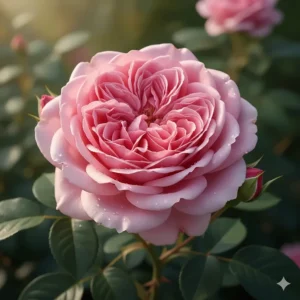
This one is the gentler cousin. The brand’s product copy describes fresh rose up top, a floral-powdery heart and a musky base in an alcohol-free concentrated attar format, produced in the UAE. In plain English: it’s the rose you can wear to a Tuesday meeting without announcing yourself.
Why does the powdery heart matter? Powdery florals read as “clean” and “skin-like,” so they blend into body warmth instead of fighting it. That makes this a strong everyday pick, especially if you’ve found most rose perfume oil too loud. The trade-off is that powdery rose is rarely photorealistic. If you picture a rose bush after a summer shower, you may feel mildly cheated.
Review data here is thin, and I won’t pretend otherwise. What I can verify is the format and note structure, which suggest a mellow, office-friendly profile. Pair it with a lightly scented body lotion and it behaves nicely.
Pros:
- ✅ Mild, skin-hugging profile for daily wear
- ✅ Alcohol-free concentrated formula
- ✅ Travel-size 6 mL bottle
Cons:
- ❌ Limited verified review volume
- ❌ Powder-forward rather than garden-fresh
Price range: under $10, so low risk for the information you gain.
3. Zoha Rose Bloom Perfume Oil — most “rose water” of the bunch
If the powdery cluster isn’t your thing, here’s the pivot. Zoha Rose Bloom is described as fresh rose, rose nectar and red-flower notes in a plant-oil base, with jojoba and marula among the listed oils. The brand also states it is made in the USA, PETA-certified vegan and hypoallergenic, though “hypoallergenic” is a marketing term, not a guarantee.
The oil base matters more than it sounds. Plant oils moisturize as they perfume, which suits dry skin and also softens the sillage into something intimate. A retailer listing shows a rating of roughly 4.6 stars across more than 400 ratings, which is a healthy pool for this category. One reviewer specifically praises that it smells like rose water rather than powder, which is exactly the contrast with the Al-Rehab options above. Another reminder from reviewers: it’s genuinely oily, so don’t spray-style apply it near clothing.
My analysis: this is the best match for beginners who want a pretty, uncomplicated rose.
Pros:
- ✅ Rose-water freshness instead of heavy powder
- ✅ Moisturizing jojoba-and-marula oil base
- ✅ Large review pool with strong average
Cons:
- ❌ Oil can mark light fabrics
- ❌ Lighter projection than attar-style rivals
Price range: mid-teens, a fair value verdict for a well-reviewed, skin-friendly bottle.
4. Nemat International Ruh Gulab Roll-On — traditional rose in a glass roller
“Ruh Gulab” is a classic name for rose essence in South Asian perfumery, and this 10 mL glass roll-on is made in India. The brand copy promises a rich, velvety rose with delicate sweetness and warm undertones, in an alcohol-free format.
Here’s the honest wrinkle. Review sentiment I found is mixed. A shopper reviewing the roll-on on a retailer page says it doesn’t resemble the “beautiful rose scent” its description promises. That fits a known pattern: traditional-style rose oils often read as heady, warm and slightly sweet-spicy rather than fresh, and that surprises people who expect a modern floral. Based on the spec comparison, Nemat Ruh Gulab is for buyers who already like Eastern rose and want a larger 10 mL bottle in glass.
What most buyers overlook is that scent descriptions on these listings are marketing copy. If you’re unsure, a cheaper test bottle first is wise.
Pros:
- ✅ Larger 10 mL glass roll-on format
- ✅ Alcohol-free, easy dab application
- ✅ Authentic Indian-style rose tradition
Cons:
- ❌ At least one reviewer found the scent disappointing
- ❌ Traditional profile may feel too heavy
Price range: around $20, which is fair only if the profile matches your taste.
5. Dukhni Rose Attar Oil — best for gifting and exploring the attar world
Dukhni sells rose attar in roll-ons ranging from 6 mL singles to larger bottles and multi-scent sets, with sandalwood-blended variants like Sandalia Rose in the same family. That variety is its real strength. You can buy a set, try three or four scents, and discover your preference without committing to one big bottle.
Brand-level review pages show mixed but mostly positive sentiment. Several reviewers love the packaging and say the rose attar set lasts longer than other attars they’ve owned. Others are blunt: one says the rose doesn’t smell like rose to them, and another found a variant too subtle to identify as rose or jasmine. Another noted that the sandalwood-blended version smells mostly of sandalwood with only a faint rose. The brand itself advises a patch test before applying the roll-on to pulse points, which is sensible advice for any concentrated attar.
My take: choose a plain rose version if you want rose, and treat the blended versions as a different category.
Pros:
- ✅ Sets let you sample several scents cheaply
- ✅ Reviewers praise packaging and longevity
- ✅ Brand recommends patch testing
Cons:
- ❌ Some reviewers say rose reads faint or unfamiliar
- ❌ Blended variants can bury the rose
Price range: varies by size and set, so check current price against how many bottles you actually want.
6. Al-Rehab Oud & Rose Roll-On — best rose-and-oud pairing for evenings
Rose and oud are one of perfumery’s great marriages: sweet and smoky, soft and dark. This 6 mL unisex roll-on is described as opening with fresh rose petals, moving to a clean white-musk heart and drying down to an oud-driven woody base. A supplier listing shows an average around 4.1 across 24 ratings, which is a small sample but a reassuring one.
What does that structure mean in real life? The rose is the first act, not the whole show. After an hour or so, expect the smokiness to take over, so it behaves more like an evening scent than a daytime floral. That also makes it the best option here for men and anyone who finds straight rose too sweet. The caution: synthetic or “oud-type” accords vary widely in quality at this price, so don’t expect a rare natural oud.
Pros:
- ✅ Unisex rose-to-oud contrast
- ✅ Good day-to-night layering potential
- ✅ Roll-on keeps application precise
Cons:
- ❌ Rose fades behind oud as hours pass
- ❌ Small review pool
Price range: low-teens or less, good value for a two-act scent.
7. Ajmal Purple Rose Perfume Oil — the premium splurge
Ajmal is one of the better-known Arabian fragrance houses, and this concentrated perfume oil comes in a 12 mL size. I couldn’t verify the full note pyramid from the pages I found, so I won’t invent one. What I can say is that resale listings place it around $40, and one buyer says it was their first fragranced oil and they’ve been “obsessed” ever since, which is enthusiasm worth noting but not proof of broad consensus.
Why consider paying four times the budget bottles? Concentration and craftsmanship usually show in how a scent evolves and lingers, and Ajmal’s attar-style oils are generally regarded as a step up from supermarket-tier roll-ons. Availability can be patchy, though. Several third-party listings I came across were marked out of stock or sold by non-US sellers, so confirm the seller and authenticity before ordering.
Pros:
- ✅ Generous 12 mL concentrated format
- ✅ Respected fragrance house behind it
- ✅ A buyer calls it a gateway to perfume oils
Cons:
- ❌ Highest price in this lineup
- ❌ Inconsistent availability across sellers
Price range: around $40, worth it only if you’re already sure you love attar-style rose.
Top 7 Rose Perfume Oil Comparison: Specs and Value
| Product | Rose Style | Base/Format | Rating Signal | Best For |
|---|---|---|---|---|
| Al-Rehab Roses | Powdery, musky | Concentrated oil, ball cap | Small review pool | Budget experimenters |
| Al Rehab Moroccan Rose | Soft, powdery | Alcohol-free attar | Limited data | Office wear |
| Zoha Rose Bloom | Fresh, rose-water | Jojoba/marula oil base | About 4.6 across 400+ ratings | Beginners, dry skin |
| Nemat Ruh Gulab | Traditional, warm | Alcohol-free, glass roller | Mixed | Eastern-rose lovers |
| Dukhni Rose Attar Oil | Concentrated attar | Roll-on, sets available | Mixed brand reviews | Gifting, sampling |
| Al-Rehab Oud & Rose | Rose to oud | Concentrated roll-on | About 4.1 across 24 ratings | Evenings, unisex |
| Ajmal Purple Rose | Concentrated Arabian rose | 12 mL oil | Anecdotal praise | Premium buyers |
The table makes the trade-off clear: the more traditional the scent, the more polarizing the reviews. Zoha Rose Bloom has the strongest and largest rating signal, which is why it’s the lowest-risk recommendation for newcomers. Al-Rehab Roses and Al Rehab Moroccan Rose win on sheer price, though their review data is thinner. If you want depth and are willing to gamble, Ajmal Purple Rose and Dukhni Rose Attar Oil are the two most “attar-like” options here.
How to Choose Rose Perfume Oil: 6 Criteria That Actually Matter
Choosing the right rose perfume oil comes down to six decisions, in this order:
- Decide your rose style first. Fresh and watery, powdery and musky, or dark and smoky? Most disappointment comes from buying the wrong style, not the wrong brand.
- Check the base. Plant oils like jojoba moisturize and soften projection; heavier bases feel richer but can transfer to clothes.
- Read the note structure, not the adjectives. “Luxurious” tells you nothing. “Rose, white musk, oud” tells you where the scent is heading after an hour.
- Weigh review volume before review score. A 4.6 across hundreds of ratings beats a 5.0 across five.
- Match the size to your commitment. A 6 mL roll-on is plenty for experimenting; buy bigger only after you’ve worn it for weeks.
- Patch test before you commit. Concentrated oils sit on skin all day, so a 24-hour test on the inner wrist is cheap insurance.
Apply these in sequence and the field narrows quickly. Most people end up choosing between two bottles, and the tie-breaker is nearly always rose style.
Rose Oil Perfume vs Spray Perfume: What Changes on Your Skin
People searching for rose oil perfume are often trying to figure out one thing: why does it smell different from a spray? The answer is chemistry and delivery. Sprays use alcohol to throw scent into the air quickly, so you get a loud opening that fades. Oils skip the alcohol, warm slowly against skin and release in a quieter, longer curve.
| Feature | Rose Oil Perfume | Alcohol Spray | Rose Water Mist |
|---|---|---|---|
| Projection | Close to skin | Wide, loud opening | Very light |
| Longevity | Often longer on skin | Varies, often shorter | Short |
| Skin feel | Moisturizing, slightly oily | Dry, can irritate | Hydrating, watery |
| Fabric risk | Can stain light fabrics | Usually low | Minimal |
| Best For | Intimate, personal wear | Statement scent | Quick refresh |
Reading that table, the real advantage of rose oil perfume is intimacy. You smell it in motion, in warm rooms and in close conversation, rather than announcing it down a hallway. The cost is that you can’t “spray and go” if you want a room-filling effect. If you want presence, layer a rose oil with an unscented spray; if you want subtlety, the oil alone will do.
Rose Oil for Perfume: Otto, Absolute or Blend?
Shoppers who search for rose oil for perfume are usually asking what’s actually inside the bottle. There are three realistic answers.
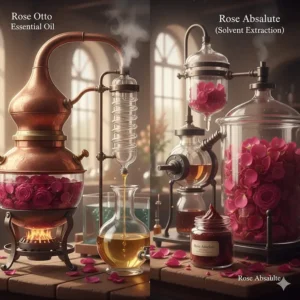
Rose otto is steam-distilled and rose absolute is solvent-extracted. Per the references I found, the absolute is the form used more commonly in perfumery. Yields are tiny: typical figures run around 1:3,000, which explains the staggering price of the real thing. Wikipedia’s rose oil entry also notes that dealers often stretch the oil with citronellol, geraniol, geranium or palmarosa, since those are rich in geraniol, the main component of rose oil.
That is why a bargain-priced roll-on can’t be pure Bulgarian otto. Damask rose is the most important rose grown for its essential oil, and the pure oil is among the most valuable perfumer’s materials, so bottles costing a few dollars are blends or rose-type accords. That isn’t a scandal. A well-made accord can smell wonderful and costs a fraction of the real thing.
What should you do with this? Stop hunting for “100% pure rose oil” at budget prices and instead judge the finished scent. A good blend that smells like rose beats an expensive bottle that smells like geranium.
Features That Actually Matter (And Those That Don’t)
Marketing language around rose perfume oil can be spectacular. Here’s the filter.
Features that matter: alcohol-free formulation if you have sensitive skin, a clear note description, a transparent carrier oil, and a decent review count. A roll-on or ball applicator also matters more than people expect, because controlled application is the difference between elegant and overwhelming.
Features that mostly don’t: the words “pure,” “royal,” “luxury” and “authentic” appear on nearly everything, so they carry no information. “Hypoallergenic” is a marketing claim rather than a medical guarantee, so it doesn’t replace a patch test. Gold packaging doesn’t change what’s inside.
What reviewers keep returning to, across the products above, is simple: does it smell like rose to my nose, and does it last through the day? Keep those two questions at the top of your list and ignore most of the rest.
Common Mistakes When Buying Rose Perfume Oil
The same errors show up again and again, and they’re all avoidable.
Buying the biggest bottle first. A 12 mL or 30 mL bottle of a scent you’ve never worn is a gamble. Start small.
Assuming “rose” means one smell. Taif-style rose is rich in geraniol and citronellol-type facets, so it can open sharp and citrusy before softening. Another buyer might expect a soft, jammy rose. Same label, wildly different experience.
Skipping the patch test. Concentrated oils stay on skin for hours, which is exactly why a reaction can build quietly.
Rubbing wrists together. Friction speeds the evaporation of lighter top notes. Dab and let it settle.
Ignoring seller reliability. Several premium oils appear through third-party sellers, sometimes shipping from overseas. Authenticity and return policies matter more here than a small price difference.
Dodge those five and your odds of loving your purchase go up dramatically.
What to Expect: Real-World Performance of Rose Perfume Oil
Specs on a listing don’t tell you how a scent behaves at 3 p.m. Here’s how to translate them.
The first fifteen minutes are the opening. With powdery musk-based options like Al-Rehab Roses, expect something strong and slightly sharp that mellows. With Zoha Rose Bloom, expect something closer to fresh rose water, lighter and less theatrical.
The next two to four hours are the heart. Oil-based scents tend to hug skin, so projection is modest but steady. People near you will notice, while people across the room won’t.
By the evening, base notes take over. That’s where musk and oud, as in Al-Rehab Oud & Rose, carry the scent while the rose recedes.
Longevity depends on your skin. Dry skin tends to drink oils quickly, so moisturizing first helps. Oily skin can hold scent longer but may amplify sweetness. Treat the “all-day” claims on listings as a best case, and plan a midday touch-up in your bag.
How to Apply Rose Perfume Oil Like You Mean It
Application is where an ordinary bottle becomes a good one. Follow this routine:
- Moisturize first. An unscented or matching-scent lotion gives the oil something to grip.
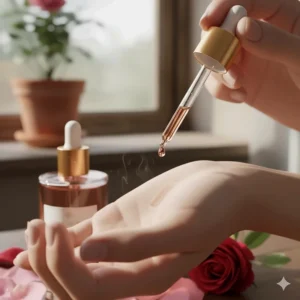
- Target pulse points. Inner wrists, the sides of the neck and behind the ears run warm, which helps release scent steadily.
- Use one swipe per spot. More is not better with concentrated oils.
- Don’t rub. Let it settle naturally; friction burns off the top notes.
- Touch up selectively. One small dab at a single pulse point refreshes the scent without doubling it.
For the first 30 days, watch for two mistakes: over-applying because you can’t smell it after twenty minutes (nose fatigue is real; Dukhni’s own replies to reviewers mention it), and storing the bottle on a sunny bathroom shelf. Heat and light degrade the scent, so keep it somewhere cool and dark. A ball or glass roller applicator needs the occasional wipe to prevent buildup, and a wiped cap keeps the seal tight.
One more trick: if a rose oil feels too intense, apply it on clothing seams only after confirming it won’t stain, or dilute a tiny amount in jojoba oil. A common roller-bottle range is around 1-3% fragrance in a carrier, though concentrated attars are typically sold ready to wear, so only dilute if you know what you’re doing.
Which Rose Perfume Oil Fits You? Real-World Scenarios
Spec talk is useful, but a decision gets easier when you picture yourself in it.
The college student on a tight budget. Eight miles of commuting, a shared bathroom shelf and about ten dollars to spend. The Al Rehab Moroccan Rose Perfume Oil or Al-Rehab Roses makes sense: cheap enough to lose, soft enough for lecture halls, and small enough to live in a jacket pocket.
The sensitive-skin professional. Dry office air, long meetings, and a history of reacting to alcohol-heavy sprays. Zoha Rose Bloom is the stronger candidate, since its jojoba-and-marula base moisturizes and its rose-water profile won’t dominate a conference room. Patch test first, regardless.
The attar enthusiast building a collection. You already own an oud or two and want a serious rose to layer. Ajmal Purple Rose or a Dukhni Rose Attar Oil set gives you room to explore, and Al-Rehab Oud & Rose covers the evening-smoke angle.
Frequency of use matters too. A daily wearer should favor lighter, skin-friendly oils, while an occasional wearer can afford a richer scent that only comes out for special evenings.
✨ Don’t Miss These Exclusive Deals!
🔍 Take your rose perfume oil collection to the next level with these carefully selected products. Click on any highlighted item to check current pricing and availability. These picks will help you find an authentic rose scent you’ll actually love wearing!
Rose Perfume Oil Problems and Solutions
Even the right bottle can misbehave. Here are the most common complaints and the fixes.
“It smells too sharp at first.” That’s the volatile top notes, typically citrusy or green. Give it fifteen to thirty minutes to settle before deciding.
“It disappeared in an hour.” Skin type and dryness are the usual culprits. Moisturize first, apply to warmer pulse points, and consider a layered base such as a matching unscented oil.
“It doesn’t smell like rose.” This is the most common review complaint across the Dukhni Rose Attar Oil and Nemat Ruh Gulab pages. Traditional rose attars smell very different from fresh flowers, so match your expectation to the style, or switch to Zoha Rose Bloom.
“It gave me a headache.” One reviewer on a retailer page reported exactly that with a different rose roll-on. If a scent causes headaches, wash it off and don’t force it. Fragrance tolerance is personal.
“It left a stain.” Oils transfer. Apply to skin only, let it absorb, and avoid light silks.
Rose Perfume Oil Safety, Allergens and Skin Sensitivity
Concentrated fragrance deserves a short safety conversation. Industry dermatology surveillance, cited by the International Fragrance Association, suggests fewer than three percent of people develop a fragrance allergy, so most wearers are fine, but a small group isn’t. IFRA standards manage exposure by modeling how products are used.
The mechanism is worth understanding. Skin sensitization refers to an immune response that can show up as redness, bumps or itching over time and after repeated exposure. That’s why a one-time reaction isn’t the only worry; repeated use of a sensitizing product can build a problem gradually.
Rose oil contains naturally occurring components, such as citronellol and geraniol, that appear on fragrance-allergen lists, and the third-party data I found shows a number of IFRA-restricted components in rose oil. In plain terms: natural doesn’t mean risk-free.
Practical rules: patch test on the inner wrist and wait 24 hours, avoid broken or inflamed skin, stop use at the first sign of irritation, and keep bottles away from children. If you’re pregnant, have eczema or have known fragrance allergies, ask a clinician before starting a new concentrated oil.
Long-Term Cost and Maintenance of Rose Perfume Oil
The sticker price isn’t the real cost. The real cost is cost per use and cost of mistakes.
| Product | Approx. Cost per mL | Longevity of Bottle | Value Verdict |
|---|---|---|---|
| Al-Rehab Roses | Roughly $1-$2 | Several months of light use | Excellent for trying |
| Zoha Rose Bloom | Roughly $2-$3 | Several months | Strong mid-range value |
| Nemat Ruh Gulab | Roughly $2 | Months, 10 mL | Fair if scent fits |
| Ajmal Purple Rose | Roughly $3-$4 | Many months, 12 mL | Worth it for enthusiasts |
Because you apply so little, a 6 mL or 10 mL roller lasts far longer than the price suggests. Dab-sized use makes even the premium bottle cheaper per wear than it looks on paper. The bigger cost risk is a failed purchase, which is why starting small is the smart economic move.
For maintenance, store bottles upright, cap them tightly, keep them cool and out of direct sunlight, and use them within a year or two for best freshness. A bottle that smells flat or sour has probably oxidized.
Rose Perfume Oil FAQ
❓ Can you layer rose perfume oil under a spray?
❓ Is rose perfume oil good for dry skin?
❓ How many dabs of rose perfume oil should you wear?
❓ Does rose perfume oil stain clothes?
❓ Why does my rose perfume oil smell different on me?
Conclusion: Choosing the Right Rose Perfume Oil
Rose perfume oil rewards patience more than money. The best bottle isn’t the priciest or the one with the most dramatic packaging. It’s the one whose rose style matches your nose and whose base suits your skin.
Here’s the short version. Start with Al-Rehab Roses or Al Rehab Moroccan Rose if you want to learn what you like for the price of a coffee. Pick Zoha Rose Bloom if you want a fresh, skin-friendly rose with a large review pool behind it. Reach for Nemat Ruh Gulab or a Dukhni Rose Attar Oil set if you’re curious about traditional attars, and go into those knowing the scent profile is polarizing. Choose Al-Rehab Oud & Rose for evening, and treat Ajmal Purple Rose as the splurge once you know you love the style.
Whatever you choose, patch test, dab lightly, moisturize first and keep it cool and dark. A thoughtful rose perfume oil purchase turns into a quiet signature, the sort of scent people lean in to identify.
✨ Ready to find your signature rose? Compare your favorites above, check current pricing and availability, and start with a small bottle you can fall in love with. 🌹
Recommended for You
- Magnetic Rose Perfume: 7 Best Picks You’ll Love in 2026
- Perfume With Lilac Scent: 7 Stunning Picks for 2026
- Lavender Vanilla Perfume: 7 Irresistible Picks for 2026
Disclaimer: This article contains affiliate links. As an Amazon Associate, I earn from qualifying purchases. If you purchase products through these links, we may earn a small commission at no additional cost to you.
✨ Found this helpful? Share it with your friends! 💬🤗
