In This Article
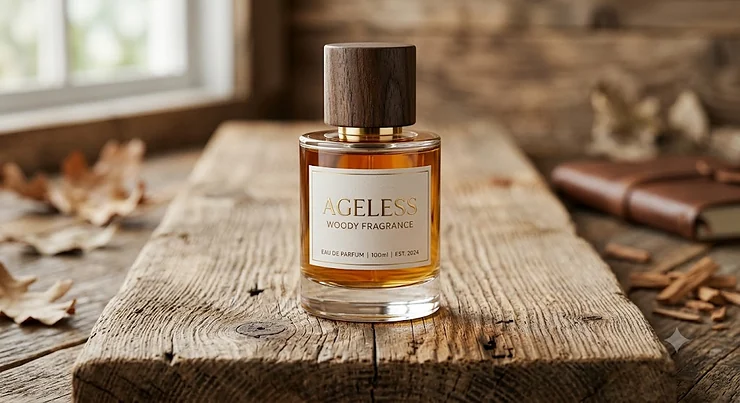
An ageless woody fragrance is a scent built on cedar, sandalwood, vetiver, or oud that reads as elegant at 25 and at 65 — it skips the sugary, trend-chasing notes that date a bottle to a specific decade. That’s the whole appeal, really. You’re not buying “this year’s scent.” You’re buying something that will still make sense on your skin in 2036.
Here’s the thing nobody tells you at the fragrance counter: most perfumes are built to be replaced. Fruity-florals age out in three years. Gourmand vanillas start smelling like a candle store by year five. Wood, on the other hand, is patient. It’s the note family that outlasted disco, outlasted Y2K colognes, and will probably outlast whatever TikTok trend is happening right now. If you’ve ever caught a whiff of an old-school barbershop and felt instantly grounded, you already understand the emotional pull of a good woody base.
This guide breaks down seven real, purchasable options — not fictional “best of” filler — spanning drugstore prices to niche-perfumery splurges. Some lean sweet and warm. Others go clean and mineral. A few are so minimalist they barely smell like “perfume” at all, which, for the right person, is exactly the point. We’ll cover what each one actually smells like in practice, who reviewers say it’s genuinely good for, where it falls short, and how to think about long-term value instead of just chasing the prettiest bottle.
Whether you’re hunting for a cross-generational fragrance to wear to work for the next decade or a forever elegant perfume you can hand down as a “signature scent” story, the goal here is the same: fewer regrettable purchases, more scents that age as gracefully as you do.
Quick Comparison Table
| Product | Best For | Concentration | Approx. Price Range |
|---|---|---|---|
| Le Labo Santal 33 | Cult-favorite unisex signature scent | Eau de Parfum | $180–$250 range |
| Tom Ford Oud Wood | Luxury evening wood-lovers | Eau de Parfum | $230–$320 range |
| Chanel Bleu de Chanel Parfum | Versatile everyday-to-formal wear | Parfum | $140–$180 range |
| Molecule 01 | Minimalists who want a “skin scent” | Eau de Toilette | $95–$180 range |
| Jo Malone Wood Sage & Sea Salt | Fresh, mineral, understated wood | Cologne | $70–$150 range |
| Bath & Body Works Mahogany Teakwood | Best budget all-rounder | Eau de Cologne | $25–$40 range |
| Old Spice Timber | Cheapest true woody classic | Cologne | Under $15 |
Looking at the table, the spread here is intentional: Old Spice Timber and Bath & Body Works Mahogany Teakwood prove you don’t need three figures to smell like cedar and warmth, while Tom Ford Oud Wood and Le Labo Santal 33 show what happens when a house sources rarer sandalwood and layers it with real craftsmanship. Molecule 01 and Jo Malone Wood Sage & Sea Salt sit in the middle as the “quiet luxury” picks — less about projection, more about texture. The lesson: price correlates with ingredient rarity and complexity, not necessarily with how “ageless” something smells.
💬 Ready to find your forever scent? Scroll down to see current pricing and availability before it changes!
💬 Just one click — help others make better buying decisions too!😊
Top 7 Ageless Woody Fragrances: Expert Analysis
1. Le Labo Santal 33 — the unisex cult classic everyone recognizes
Ask anyone who’s spent time in a hotel lobby in the last decade if they know this smell, and there’s a good chance they’ll nod before you finish the sentence. Le Labo Santal 33 built its reputation less on marketing and more on repetition — enough people wore it that it became shorthand for “expensive-smelling wood.” The base leans on Australian sandalwood and cedarwood, propped up by cardamom, leather-like accords, and a violet-iris twist that keeps it from smelling one-note.
What that sandalwood-leather pairing means on skin: it opens a little sharp and smoky, almost like a just-lit campfire, then settles into a warm, papery dry-down that reads as confident without shouting. Because the leather note is synthetic and restrained rather than heavy animalic leather, it stays wearable in an office, not just a bar.
Based on the spec comparison with other niche sandalwood scents, this is less about raw sandalwood concentration and more about how skillfully Le Labo balances spice against powder. It’s a strong pick for someone who wants one “signature” scent rather than a rotating collection — the kind of person who’d rather nail one identity than experiment every season.
Reviewers consistently note that Santal 33 performs differently depending on skin chemistry — some get 6+ hours of steady warmth, others find it fades to a “skin scent” within a couple of hours and needs a reapplication. A recurring complaint in aggregated review sentiment is that, given how ubiquitous it’s become, it no longer feels as distinctive as it did a decade ago.
Pros:
- ✅ Genuinely unisex — reads elegant on any wearer
- ✅ Balanced smoky-woody profile, not overly sweet
- ✅ Recognizable “quality” scent without feeling generic
Cons:
- ❌ Performance varies a lot by skin type
- ❌ Become common enough to feel less distinctive
At around $180–$250 for the standard bottle size, Le Labo Santal 33 sits at the entry point of niche perfumery pricing — check current price before buying, since niche houses adjust more frequently than mass-market brands. For the person who wants a genuine conversation-starter scent, it’s a reasonable value; for someone chasing an “undiscovered” signature, it may already be too mainstream.
2. Tom Ford Oud Wood — most luxurious oud-sandalwood blend
If Santal 33 is the scent everyone half-recognizes, Tom Ford Oud Wood is the one that makes people ask, directly, “what are you wearing?” It opens with cardamom and Sichuan pepper before settling into a rich middle of oud, sandalwood, and rosewood, finishing on vetiver, tonka bean, amber, and a touch of vanilla.
Here’s what that ingredient stack means in real terms: genuine oud (agarwood) is one of the most expensive raw materials in perfumery, so even a synthetic-leaning oud accord built around it tends to carry real depth — smoky, slightly medicinal, and undeniably rich rather than harsh. The rosewood and sandalwood soften that intensity so it doesn’t read as aggressive as some pure-oud fragrances can.
Based on the spec comparison with cheaper oud-adjacent scents, the difference buyers notice most is smoothness — budget ouds often smell sharp or synthetic in the first ten minutes, while this one integrates the smokiness into something closer to aged wood furniture than burning incense. This is a fragrance for someone who wants an evening or cold-weather signature, not a light daytime option.
Aggregated reviewer sentiment consistently praises the longevity and the compliment-generating projection, though a common complaint is that the price-per-wear feels steep for anyone who wants to use it as a daily fragrance rather than an occasion piece.
Pros:
- ✅ Rich, smoky oud that smells refined, not harsh
- ✅ Long wear time reported across most reviews
- ✅ Strong “special occasion” signature scent
Cons:
- ❌ Premium price limits daily, casual use
- ❌ Too intense for warm-weather daytime wear
Prices generally sit in the $230–$320 range depending on bottle size — always check current price, since Tom Ford’s private-label pricing shifts periodically. For someone who wants one true “wow” bottle rather than five mid-tier ones, this is a defensible splurge; for someone on a tighter budget, it’s worth trying a sample before committing.
3. Chanel Bleu de Chanel Parfum — most versatile modern classic
Chanel Bleu de Chanel Parfum occupies a strange, useful middle ground: woody enough to belong on this list, but polished enough to wear to a wedding, a job interview, and a Tuesday all in the same week. The Parfum concentration (as opposed to the earlier EDT and EDP versions) leans further into warm cedar, sandalwood, and labdanum amber, with citrus and incense threaded through the opening.
What that concentration shift actually changes: Parfum-strength formulas typically carry a higher percentage of aromatic compounds than EDT, which tends to translate to a smoother, less alcohol-forward opening and a longer, quieter dry-down. In practice, that means less of a sharp citrus blast up top and more of that resinous, ambery warmth arriving sooner.
What most buyers overlook about this one is that its popularity is precisely its risk — it’s genuinely one of the best-selling men’s fragrances of the last fifteen years, so in certain cities it can feel less like a “signature” and more like a uniform. That’s a trade-off worth weighing if standing out matters to you.
Reviewers frequently describe it as the fragrance equivalent of a well-tailored navy suit: safe, sharp, and dependable rather than daring. A recurring theme in aggregated feedback is that longevity is solid (often cited around 6–8 hours) but the sillage (how far it projects) is moderate rather than room-filling.
Pros:
- ✅ Genuinely versatile across formal and casual settings
- ✅ Smooth, less “alcohol-forward” Parfum concentration
- ✅ Widely available with easy testing at retail counters
Cons:
- ❌ Extremely common — less distinctive in dense cities
- ❌ Moderate projection compared to niche alternatives
Expect a price in the $140–$180 range for a full-size bottle, subject to change, so check current price before buying. This is the fragrance to reach for if you want one bottle to cover 80% of your life without much fragrance-wardrobe planning.
4. Molecule 01 — minimalist skin-scent for purists
This is the fragrance equivalent of a plain white t-shirt, and it means that as a compliment. Molecule 01, created by perfumer Geza Schoen, consists almost entirely of a single synthetic aroma-molecule called Iso E Super — a hyper-modern, velvety cedarwood-adjacent compound first developed in a lab in 1973.
What that single-ingredient approach means practically: rather than layering dozens of notes, the formula relies on how Iso E Super interacts with your individual skin chemistry, which is why wearers so often describe it as smelling “like themselves, but better” rather than like a distinct, describable perfume. It has a strange, well-documented characteristic where it seems to fade and then reappear as your body heat re-releases the molecule.
Based on the spec comparison against complex woody blends like Oud Wood, this is the opposite philosophy entirely — no top-middle-base structure, no development over the day, just a warm woody aura that stays close to skin. That makes it a genuinely interesting pick for someone who finds traditional perfume “too much,” or who wants a scent that layers invisibly under stronger fragrances to extend their longevity.
Aggregated reviews are split almost evenly: some wearers report it as an addictive, magnetic “clean but woody” scent that draws compliments precisely because people can’t identify it. Others say it’s simply too faint to register as a fragrance purchase at all, especially on drier skin types.
Pros:
- ✅ Genuinely gender-neutral, minimalist woody scent
- ✅ Works as a base layer to extend other fragrances
- ✅ Distinct “modern lab-cedar” character, not generic
Cons:
- ❌ Very subtle — some wearers can barely detect it
- ❌ Not ideal as a sole “statement” fragrance
Bottle sizes and pricing vary meaningfully by retailer, generally landing in the $95–$180 range — check current price and size options before ordering. This is best suited to buyers who already own a bolder bottle and want a quiet, everyday alternative, not a first and only fragrance purchase.
5. Jo Malone Wood Sage & Sea Salt — freshest coastal-woody option
Not every woody fragrance needs to smell like a cigar lounge. Jo Malone Wood Sage & Sea Salt takes the category somewhere different: bergamot and ambrette seed up top, a briny sea-salt-and-mineral heart, and a dry, earthy sage and driftwood base. It reads more like a walk along a cold coastline than a study.
Here’s what that mineral-woody combination means in practice: instead of dense, resinous warmth, you get something airy and slightly salty, with the “wood” showing up mostly in the dry, herbal sage note rather than a rich sandalwood or cedar base. That makes it one of the lighter, more office-appropriate options on this list, especially for warmer climates.
Based on the spec comparison with heavier oud- or amber-driven woods, this fragrance trades intensity for approachability. It’s genuinely unisex — Jo Malone markets its entire cologne line as shared scents meant to be layered — and it tends to suit buyers who find traditional “masculine” wood fragrances too heavy for daily rotation.
A recurring theme in aggregated reviewer feedback is that longevity is its biggest limitation; many describe it fading to a skin scent within one to two hours, meaning reapplication is often necessary for all-day wear. On the positive side, reviewers consistently praise how “clean” and inoffensive it is, making it one of the safer bets for shared or professional spaces.
Pros:
- ✅ Fresh, mineral take on woody notes — not heavy
- ✅ Genuinely unisex, designed for layering
- ✅ Office- and warm-weather-friendly wear
Cons:
- ❌ Shorter longevity than most on this list
- ❌ Lacks the depth of true oud or sandalwood scents
Pricing typically falls in the $70–$150 range depending on bottle size, so check current price before purchasing. This is the pick for someone who wants “woody” without the heaviness — a lighter, everyday entry point into the category.
6. Bath & Body Works Mahogany Teakwood — best budget woody all-rounder
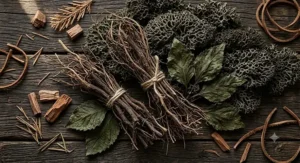
Not every ageless scent has to come in a heavy glass bottle with a three-figure price tag. Bath & Body Works Mahogany Teakwood has built a loyal following by delivering a genuinely warm, woody profile — think teakwood, mahogany, amber, and a touch of citrus and spice — at a fraction of the cost of department-store names.
What that accessible price point means for the formula: this is an Eau de Cologne concentration, generally lighter than an EDP, so it won’t carry the same complexity or depth as a niche fragrance built around real sandalwood or oud. What it does deliver is a straightforward, comforting woody-amber scent that’s easy to layer with the brand’s matching body care line for a stronger, more consistent result.
Based on the spec comparison with pricier alternatives, the honest trade-off here is nuance — you’re not getting a multi-stage dry-down or rare ingredients, but you are getting a reliably pleasant, crowd-pleasing wood scent that most people find easy to like. That makes it a smart starter fragrance for someone new to the woody category who isn’t ready to commit real money before knowing if the notes suit them.
Reviewers consistently describe it as a “cozy sweater in a bottle” — warm without being overpowering — and a common theme in aggregated feedback is that it performs best when paired with the matching body lotion or shower gel, since the cologne alone runs on the lighter side for longevity.
Pros:
- ✅ Genuinely warm, woody-amber scent at low cost
- ✅ Easy to layer with matching body care products
- ✅ Approachable, crowd-pleasing profile
Cons:
- ❌ Shorter longevity than niche or designer options
- ❌ Less complexity or nuance in the dry-down
At around $25–$40, this is one of the most accessible entries into the woody category — check current price, since Bath & Body Works runs frequent promotions. For a budget-conscious buyer or someone testing whether they even like woody scents, it’s a low-risk way in.
7. Old Spice Timber — cheapest true woody classic
If you want to know what “ageless” looks like at the absolute entry level, it’s this. Old Spice Timber has quietly become a drugstore-aisle sleeper hit, built around cedarwood, patchouli, and a touch of amber that reads noticeably more grown-up than most of Old Spice’s more playful, younger-skewing lineup.
What that stripped-down formula means practically: at this price point, you’re not getting rare ingredients or a complicated multi-note structure — you’re getting a straightforward, well-balanced cedar-and-amber accord that smells intentional rather than like an afterthought, which is genuinely rarer at this price than you’d expect.
Based on the spec comparison against fragrances ten times its cost, the honest analysis is that Old Spice Timber won’t compete on complexity or projection, but it holds its own on “does this smell like a coherent, pleasant wood scent” — which, for a lot of casual buyers, is really the only bar that matters day to day.
Aggregated reviewer sentiment is notably positive for the price bracket, with many describing it as surprisingly close in character to pricier department-store woody colognes. A recurring complaint is limited longevity — most reviewers report needing to reapply after a few hours, especially with an active day.
Pros:
- ✅ Genuinely pleasant cedar-amber scent for the price
- ✅ Easy, low-risk way to try the woody category
- ✅ Widely available at nearly any drugstore or supermarket
Cons:
- ❌ Shorter longevity, needs reapplication
- ❌ Limited depth compared to premium alternatives
At under $15, Old Spice Timber is close to a no-risk purchase — check current price and stock at your local store. For teenagers, first-time fragrance buyers, or anyone who wants a backup bottle for the gym bag, it’s hard to argue with the value.
Practical Usage Guide: Getting the Most From Your Ageless Woody Fragrance
Buying the right bottle is half the equation — application technique does a lot of the remaining work, especially with woody fragrances, which tend to sit closer to skin than bright citrus or floral scents.
Start with moisturized skin. Woody notes, particularly sandalwood and cedar, bind better to hydrated skin than dry skin, which is part of why the same bottle can smell noticeably different on two people. A quick swipe of unscented lotion on pulse points before spraying can meaningfully extend wear time.
Target pulse points, not clothing. Wrists, the base of the neck, and behind the ears generate consistent body heat, which helps woody and amber notes diffuse gradually rather than blasting out all at once. Avoid rubbing wrists together after applying — that friction breaks down the fragrance molecules and can dull the top notes prematurely.
Consider layering for the lighter options on this list. Molecule 01 and Jo Malone Wood Sage & Sea Salt, in particular, work well spritzed underneath a matching lotion or body wash, since the concentration alone may not carry through a full day.
A common first-30-days mistake: over-applying a new, unfamiliar scent because you can’t smell it on yourself after a few hours (a phenomenon called nose fatigue). Stick to 2–4 sprays until you’ve lived with a fragrance for a week or two and gotten feedback from someone else on real-world projection.
Real-World Scenarios: Who Actually Wears These Scents
The new-to-fragrance college student. Budget matters, and so does not overdoing it in a lecture hall. Old Spice Timber or Bath & Body Works Mahogany Teakwood make sense here — low financial risk, easy reapplication between classes, and a scent profile mature enough not to read as a body spray.
The office professional who wants one dependable signature. Chanel Bleu de Chanel Parfum is built for exactly this — polished enough for client meetings, versatile enough for after-work dinners, and widely recognized as a safe, professional choice.
The minimalist who finds most perfume “too much.” Molecule 01 solves a real problem for this buyer: a woody presence without a loud, describable scent trail, ideal for shared workspaces or scent-sensitive environments.
The special-occasion collector. Someone who already owns everyday bottles and wants a distinct “event” fragrance should look toward Tom Ford Oud Wood or Le Labo Santal 33 — richer, more expensive, and genuinely memorable rather than an everyday workhorse.
How to Choose an Ageless Woody Fragrance
- Identify your climate. Heavier woods like oud and amber can feel overwhelming in hot, humid weather, while fresher options like Jo Malone Wood Sage & Sea Salt perform better in warm climates.
- Decide on daily versus occasion use. A $250 bottle you wear twice a year has a very different cost-per-wear than a $30 bottle worn daily — think through actual usage before price.
- Test skin chemistry, not just the bottle. Woody notes especially can smell different depending on skin oil levels and body chemistry, so a tester strip alone won’t tell the full story.
- Prioritize longevity if reapplication isn’t practical. If you can’t easily carry a travel bottle, favor Parfum or Eau de Parfum concentrations over lighter colognes.
- Consider gender-neutral marketing as a feature, not a limitation. Several of the top ageless woody scents (Le Labo Santal 33, Jo Malone Wood Sage & Sea Salt, Molecule 01) are explicitly designed to be worn by anyone.
- Read aggregated reviews for longevity claims, not just scent description. Marketing copy rarely mentions how fast a scent fades — real reviewer consensus usually does.
- Buy a sample before committing to a full bottle, especially for anything above the $100 range, since return policies on opened fragrance are limited.
Common Mistakes When Buying a Woody Fragrance
The most frequent misstep is buying based on the bottle’s marketing story rather than the actual note breakdown — a fragrance can be marketed as “woody” while leaning 80% sweet vanilla with wood as an afterthought. Always check the listed top, heart, and base notes rather than the ad copy alone.
Another common error: assuming a higher price always means better longevity. As the pros/cons above show, Tom Ford Oud Wood and Le Labo Santal 33 perform well on skin, but so does Old Spice Timber relative to its price — cost and performance don’t move in lockstep.
Buyers also frequently skip the “does this suit my existing signature scent” question entirely and buy on impulse, which is part of why unopened fragrance resale is such a large secondary market. Testing before buying, even via a small decant or sample vial, avoids this expensive mistake.
Ageless Woody Fragrance vs Trend-Driven Scents
| Factor | Ageless Woody Fragrance | Trend-Driven Fragrance |
|---|---|---|
| Longevity of appeal | Stays relevant for years, sometimes decades | Often feels dated within 2–3 years |
| Note complexity | Built on stable, time-tested notes (cedar, sandalwood, vetiver) | Often relies on trendy accords (candy-sweet gourmands, ultra-fresh “clean” musks) |
| Resale/gifting value | Recognizable, safer as a gift | Riskier — recipient’s taste may not match short-lived trend |
| Best For | Buyers building a long-term signature scent | Buyers who enjoy rotating seasonal or novelty scents |
The table above highlights the core trade-off: trend-driven fragrances can be genuinely fun and novel in the moment, but they rarely become someone’s long-term identity the way Chanel Bleu de Chanel Parfum or Le Labo Santal 33 have for their respective wearers. If you’re building a “forever” fragrance wardrobe rather than a seasonal rotation, wood wins on almost every axis except novelty.
Woody fragrances also tend to hold up better in warm storage conditions than lighter citrus-forward scents, since heavier base notes are generally more chemically stable over time — another reason collectors treat them as a safer long-term investment.
What to Expect: Real-World Performance
Specs on a box rarely translate directly to daily experience, so here’s the practical version. A typical Eau de Parfum-strength woody fragrance, such as Tom Ford Oud Wood or Le Labo Santal 33, tends to project noticeably for the first 1–2 hours, settle into a moderate “close to skin” phase for hours 3–6, and often remain faintly detectable up to hour 8 depending on skin type. Lighter colognes, like Jo Malone Wood Sage & Sea Salt or Old Spice Timber, generally follow a shorter arc — strong for the first hour, then fading to barely-there by hour 2 or 3.
Temperature and humidity change this significantly. Warm skin releases fragrance molecules faster, meaning a hot day can shorten wear time even for a strong Parfum concentration, while cooler, drier weather tends to make any woody scent last longer and project less aggressively.
Skin type matters just as much as concentration. Naturally oily skin tends to hold fragrance molecules longer than dry skin, which is part of why the same bottle gets wildly different longevity reviews from different wearers — it’s not necessarily inconsistent manufacturing, it’s biology.
Features That Actually Matter (And Those That Don’t)
Actually matters: the base note structure (sandalwood, cedar, vetiver, oud) since that’s what determines how “ageless” a scent reads over years of wear. Actually matters: concentration (Parfum > Eau de Parfum > Eau de Toilette > Cologne, generally, for longevity). Actually matters: how the scent performs on your specific skin, which no amount of marketing copy can substitute for.
Doesn’t matter much: bottle design, despite how heavily brands lean on packaging in marketing. Doesn’t matter much: celebrity or designer name recognition alone — some of the most acclaimed woody scents on this list, like Molecule 01, come from niche houses most people have never heard of. Doesn’t matter much: limited-edition status, since a “forever” fragrance should be something you can reliably repurchase for years, not a one-time novelty.
Long-Term Cost & Value Analysis
| Product | Approx. Price Range | Estimated Wears Per Bottle | Rough Cost Per Wear |
|---|---|---|---|
| Old Spice Timber | Under $15 | 60–80 | Under $0.25 |
| Bath & Body Works Mahogany Teakwood | $25–$40 range | 50–70 | Around $0.50 |
| Jo Malone Wood Sage & Sea Salt | $70–$150 range | 40–60 | $1.50–$3 |
| Molecule 01 | $95–$180 range | 50–80 | $1.50–$3 |
| Chanel Bleu de Chanel Parfum | $140–$180 range | 60–100 | $1.50–$2.50 |
| Le Labo Santal 33 | $180–$250 range | 60–100 | $2–$3.50 |
| Tom Ford Oud Wood | $230–$320 range | 60–100 | $3–$4.50 |
Looking at cost-per-wear rather than sticker price flips the value conversation. Old Spice Timber and Bath & Body Works Mahogany Teakwood are, unsurprisingly, the cheapest per use, but Chanel Bleu de Chanel Parfum actually holds up better than its price tag suggests once you factor in higher spray efficiency and longer wear per application. The real premium you’re paying for with Tom Ford Oud Wood isn’t just ingredients — it’s exclusivity and occasion-wear positioning, which is a legitimate reason to buy it, just not a “value” reason.
Estimated wears assume standard 2–4 spray applications and vary based on bottle size and individual usage habits; actual results will differ.
Safety, Allergens & Ingredient Transparency
Fragrance ingredients in the U.S. are regulated as cosmetics rather than drugs, meaning companies aren’t required to list every individual fragrance component on the label — “fragrance” or “parfum” can legally stand in for a proprietary blend, according to FDA guidance on fragrances in cosmetics. That’s part of why two people can have very different reactions to what looks like a simple ingredient list.
Globally, the fragrance industry self-regulates ingredient safety through usage standards that restrict or prohibit certain materials based on independent scientific review, as outlined in the current IFRA safety standards. Reputable fragrance houses — including every brand featured in this guide — formulate in compliance with these standards, which is worth knowing if you have a history of skin sensitivity.
If you have known fragrance allergies, patch-testing a small amount on your inner arm 24–48 hours before applying to pulse points is a reasonable precaution, particularly with concentrated Parfum-strength formulas like Tom Ford Oud Wood or Chanel Bleu de Chanel Parfum. Ingredients like oakmoss, certain synthetic musks, and high concentrations of citrus oils are among the more commonly reported sensitizers across the industry.
Your Buyer’s Decision Framework
If you want one fragrance to wear nearly every day for years, choose a Parfum or EDP-strength option like Chanel Bleu de Chanel Parfum, because the concentration is built for repeat, long-term wear without feeling excessive.
If you’re testing whether woody scents even suit you before spending real money, choose Old Spice Timber or Bath & Body Works Mahogany Teakwood, because the low price removes the financial risk of an experiment.
If you want a distinct “event only” fragrance separate from your everyday scent, choose Tom Ford Oud Wood, because its richness and price point naturally discourage overuse and keep it feeling special.
If traditional perfume feels too strong or too “loud” for your taste, choose Molecule 01, because its minimalist, skin-close character solves exactly that discomfort.
If you want something unisex that a partner or family member could also wear from the same bottle, choose Jo Malone Wood Sage & Sea Salt or Le Labo Santal 33, because both are explicitly marketed and formulated as shared, gender-neutral scents.
Frequently Asked Questions
❓ What makes a fragrance 'ageless' instead of trendy?
❓ Can woody fragrances be worn by anyone, regardless of gender?
❓ How long does a bottle of woody perfume typically last?
❓ Do more expensive woody fragrances always smell better?
❓ What's the best way to make a woody fragrance last longer on skin?
Conclusion
The right ageless woody fragrance isn’t about finding the most expensive bottle on the shelf — it’s about matching concentration, note profile, and price to how you’ll actually wear it. A college student and a fragrance collector shouldn’t be shopping the same list, even though both might land on a bottle from this exact roundup.
If there’s one throughline across all seven picks, it’s this: cedar, sandalwood, and vetiver simply don’t go out of style the way sweeter, trend-chasing notes do. Whether you land on the drugstore-priced Old Spice Timber or the niche-perfumery Le Labo Santal 33, you’re buying into a note family with genuine staying power — something that will still smell intentional a decade from now, not dated.
Take the time to sample before committing to a full bottle, factor in your actual climate and daily routine, and don’t assume price alone signals quality. The best “forever” fragrance is the one that actually gets worn, refilled, and worn again — not the one that looks impressive sitting on a shelf.
✨ Don’t Miss These Exclusive Deals!
🔍 Take your fragrance collection to the next level with these carefully selected woody picks. Click on any highlighted item to check current pricing and availability. These timeless scents will help you create a signature you’ll wear for years to come!
Recommended for You
- Mature Women Woody Perfume: 7 Sophisticated Picks for 2026
- Intellectual Chypre Perfume: 7 Cerebral Picks for 2026
- Elegant Iris Fragrance: 7 Stunning Picks for 2026 (Loved & Hated)
Disclaimer: This article contains affiliate links. As an Amazon Associate, I earn from qualifying purchases. If you purchase products through these links, we may earn a small commission at no additional cost to you.
✨ Found this helpful? Share it with your friends! 💬🤗
