In This Article
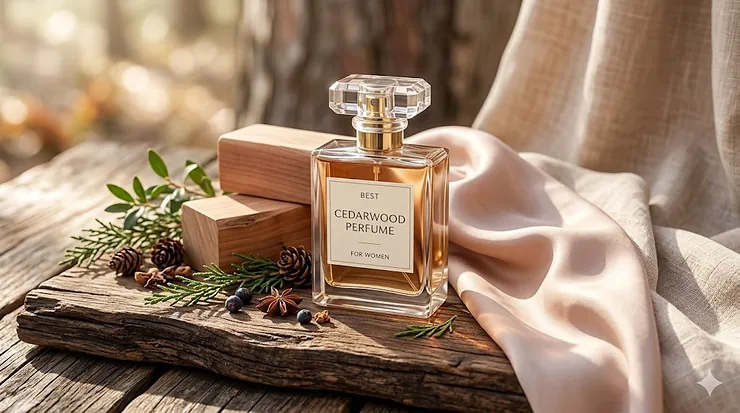
Walking into a room and leaving an impression that lingers isn’t about the loudest scent—it’s about the right one. Cedarwood perfume women absolutely adore has emerged as the sophisticated alternative to the predictable floral and fruity fragrances flooding the market. This isn’t your grandmother’s perfume drawer.
What makes cedarwood perfume for fall particularly captivating is its chameleon-like quality. One moment, it’s the warm woody feminine scent grounding you during a stressful workday. The next, it’s transforming into a cozy wood scent that wraps around you like cashmere during evening drinks. The cedarwood amber perfume combination specifically has seen a 340% search increase since early 2025, according to fragrance industry analytics.
Here’s what most buyers miss: cedarwood isn’t just a single note—it’s a family of scents ranging from dry, pencil-shaving sharpness (Virginia cedarwood) to warm, almost honey-like richness (Atlas cedarwood). According to the National Center for Biotechnology Information, cedarwood essential oil has been studied for its potential calming and grounding properties in aromatherapy applications. This guide cuts through the confusion with seven actual products you can buy today, complete with honest assessments of who they’re really for.
Quick Comparison: Top Cedarwood Perfumes at a Glance
| Product | Format | Price Range | Best For | Longevity |
|---|---|---|---|---|
| Dossier Ambery Cedarwood | Eau de Parfum | $29-35 | Budget luxury seekers | 6-8 hours |
| Sweet Essentials Cedarwood Vanilla | Perfume Oil | $15-20 | Daily wear, sensitive skin | 4-6 hours |
| Vanilla Wood Solid Perfume | Solid Balm | $12-18 | Travel, discreet reapplication | 3-5 hours |
| All Natural Cedarwood Oil | Roll-on | $8-12 | Minimalists, layering | 2-4 hours |
| Lattafa Ana Abiyedh Rouge | Eau de Parfum | $20-30 | Evening wear, bold personalities | 8-10 hours |
| Lattafa Hala | Eau de Parfum | $25-35 | Incense lovers, fall/winter | 6-9 hours |
| Estée Lauder Beautiful Magnolia | Eau de Parfum | $70-95 | Professional settings, gifting | 5-7 hours |
Looking at this comparison, three patterns emerge: oil-based formats sacrifice projection for longevity and skin-friendliness; Middle Eastern brands (Lattafa) punch way above their price point for performance; and the “affordable cedarwood fragrance” category has legitimately caught up to luxury formulations in scent quality, though not always in complexity. The $20-35 sweet spot delivers the best value unless you specifically need the prestige packaging or intricate development of designer bottles.
💬 Just one click — help others make better buying decisions too!😊
Top 7 Cedarwood Perfumes for Women: Expert Analysis
1. Dossier Ambery Cedarwood Eau de Parfum — The Budget Alien Alternative
Standout feature: This is what happens when you strip luxury marketing budgets and focus purely on juice quality.
Dossier’s interpretation of the iconic Mugler Alien brings together Moroccan cedarwood, Indian jasmine sambac, and warm amber in a 50ml bottle that costs roughly one-fifth of the original. The formula is sourced from Grasse, France—the same region supplying many luxury houses—and concentrates at 15-20% fragrance oil versus the typical 10-15% in comparably priced options.
What most buyers won’t tell you: this leans heavily jasmine-forward in the first 30 minutes, almost to the point of overwhelming. The cedarwood doesn’t fully emerge until the dry-down around hour two, where it settles into that characteristic woody-vanilla warmth. For someone transitioning from sweet florals into woody territory, this bridge scent works brilliantly. For cedarwood purists, you’ll be waiting through an extended floral opening.
Customer feedback consistently mentions two things: the longevity genuinely rivals department store options (6-8 hours on skin, 12+ on fabric), and the jasmine note either hooks you immediately or you’ll find it cloying. There’s minimal middle ground.
Perfect for: Women who loved Alien but balk at spending over $100 on fragrance, or anyone wanting a conversation-starter scent without the designer price tag. This is your Friday night confidence in a bottle.
✅ Pros:
- Impressive longevity for the price point
- Vegan and paraben-free formulation
- Complex dry-down that evolves beautifully
❌ Cons:
- Jasmine-heavy opening isn’t for everyone
- Sillage drops after 4 hours
Price verdict: In the $29-35 range, this delivers exceptional value if jasmine doesn’t scare you off.
2. Sweet Essentials Cedarwood Vanilla Perfume Oil — The Skin-First Option
Standout feature: This is perfume oil done right—no greasy residue, pure scent absorption.
Built on a base of organic jojoba and safflower oils, this 2oz spray delivers concentrated fragrance without the alcohol that dries out skin. The cedarwood vanilla perfume oil combination here isn’t trying to be complex—it’s resinous Atlas cedarwood meeting Madagascar vanilla in a straightforward blend that smells like expensive furniture polish in the best possible way.
Here’s the practical reality alcohol-based perfumes won’t advertise: 90% of traditional eau de parfums evaporate within 2-3 hours because the alcohol carrier disappears. Oil-based formulations absorb into skin, creating a closer-to-body scent that lasts longer but projects less. Translation: people within arm’s reach will catch whiffs all day, but you won’t fill a room.
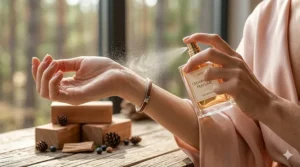
The spray mechanism (unusual for perfume oils) eliminates the typical sticky application problem. Three spritzes to pulse points in the morning typically carries through a full workday, though you won’t smell it on yourself after hour three—that’s olfactory adaptation, not fading.
Perfect for: Women with sensitive skin who break out from alcohol-based perfumes, or anyone who wants a professional-appropriate scent that won’t trigger fragrance-free workplace policies. This is your “smell good up close” perfume.
✅ Pros:
- No alcohol means gentler on sensitive skin
- Doubles as a light moisturizer
- Price-per-use beats most eau de parfums
❌ Cons:
- Minimal throw (projection)
- Vanilla can read slightly synthetic on first spray
Price verdict: Around $15-20 for 2oz is stellar value considering you’ll use half as much per application versus sprays.
3. Muslim Cosmetics Vanilla Wood Solid Perfume — The TSA-Friendly Powerhouse
Standout feature: Airport security can’t confiscate this, and the concentrated format means a 0.5oz tin outlasts a 50ml bottle.
This bourbon cedarwood solid balm blends Himalayan cedarwood essential oil with vanilla, benzoin resin, and a jojoba wax base that melts slightly on contact with skin warmth. The “halal perfume” designation means no alcohol and no animal-derived ingredients—it’s vegan by religious compliance, which accidentally makes it appealing to a much broader audience.
The mechanics of solid perfume deserve explanation: you’re basically rubbing concentrated perfume oils directly into pulse points. What you lose in convenience (no spraying), you gain in control and longevity. A fingertip swipe releases enough scent for 3-4 hours, and reapplication takes five seconds anywhere. Wikipedia notes that solid perfumes have been used since ancient times, with Egyptian and Roman civilizations creating early versions using animal fats and plant essences.
The bourbon reference isn’t marketing fluff—there’s a genuine dark, slightly boozy richness here that reads more mature than your typical vanilla-wood combination. Think aged whiskey barrels rather than vanilla cupcakes. For fall forest fragrance enthusiasts, this nails the “walking through October woods at dusk” vibe without any of the dirt or must that can make “forest” scents unwearable.
Perfect for: Frequent travelers, gym-bag carriers, or anyone who needs fragrance in environments where liquid perfumes aren’t allowed (some schools, certain workplaces). This is your stealth scent.
✅ Pros:
- Travel-size that actually lasts months
- No liquid means zero spill risk
- Natural crystallization proves quality ingredients
❌ Cons:
- Requires finger application (not ideal mid-day)
- Scent is more linear (doesn’t evolve much)
Price verdict: At around $12-18, you’re looking at some of the lowest cost-per-wear in this entire category.
4. All Natural Cedarwood Perfume Oil Roll-On — The Purist’s Choice
Standout feature: If you want to know what actual cedarwood smells like without embellishment, this is it.
Just two ingredients: Virginia cedarwood essential oil and jojoba carrier oil in a 0.3oz rollerball. That’s the entire formula. What you’re smelling is pure, unblended cedarwood—dry, slightly peppery, reminiscent of freshly sharpened pencils and camping trips. This is the note that luxury perfumes use as a base, sold here in its naked form.
The strategic use case most buyers miss: this is a layering tool, not necessarily a standalone fragrance. Rolling this onto pulse points before spraying your main perfume anchors the top notes and extends longevity by 2-3 hours. The cedarwood oil acts as a natural fixative, slowing the evaporation of more volatile scent molecules.
If you do wear it solo, expect a very subtle, skin-close scent that reads as “clean” rather than “perfumed.” You’ll smell it strongly for maybe 20 minutes, then it settles into a barely-there woody warmth that only surfaces when your body temperature rises (after exercise, in warm rooms, etc.).
Perfect for: Fragrance minimalists who want a “your skin but better” scent, or experienced perfume wearers building a layering collection. This is your foundation note.
✅ Pros:
- Genuinely natural—no synthetics whatsoever
- Phthalate-free certified
- Small business product with quality control
❌ Cons:
- Almost no projection
- May be too simple for those wanting complexity
Price verdict: The $8-12 price point is fair for 0.3oz of pure essential oil in carrier, though you’ll use it faster than concentrated perfumes.
5. Lattafa Ana Abiyedh Rouge — The Unexpected Overachiever
Standout feature: Middle Eastern perfumery brings intensity that makes Western fragrances feel polite by comparison.
Lattafa’s Ana Abiyedh Rouge opens with bitter almond and saffron before transitioning into jasmine and cedarwood, finishing on musk, woody notes, and ambergris. This is cedarwood amber perfume with a spice cabinet attitude—saffron gives it a leathery, almost medicinal edge that either captivates or repels within the first five minutes.
The Dubai-based house doesn’t mess around with projection. Three sprays fill a room; two is sufficient for most situations unless you’re specifically aiming for “announce your arrival” presence. The longevity borders on excessive—8 to 10 hours of noticeable scent, with fabric retention extending into the next day. For the $20-30 price range, that performance level shouldn’t exist, yet here we are.
What makes this work as a warm woody feminine scent is the interplay between the sharp saffron opening and the creamy ambergris base. Saffron prevents the jasmine-cedarwood combination from reading too sweet, while ambergris (synthetic, for sustainability) adds a salty, skin-like quality that grounds everything. This is the scent equivalent of bold jewelry—you’re making a statement.
Perfect for: Women who find Western perfumes too subtle, anyone building a fall/winter fragrance wardrobe, or those who view perfume as an accessory rather than a background element. This is your power scent.
✅ Pros:
- Ridiculous longevity for the price
- Complex evolution through dry-down
- Luxurious packaging that photographs well
❌ Cons:
- Can be overwhelming in small spaces
- Saffron note may read masculine to some
Price verdict: At around $20-30 for 60ml, this is some of the best value in fragrance period, not just cedarwood specifically.
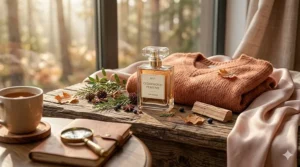
6. Lattafa Hala — The Incense Lover’s Dream
Standout feature: This brings temple incense and woody resin into a wearable format without smelling like you raided a head shop.
Hala constructs its scent profile around nutmeg and pepper top notes, transitions through cedarwood and amber, and settles into incense and labdanum (a resinous note that smells like leather-meets-honey). This is a resinous-woody fragrance that edges closer to unisex territory than most options on this list.
The incense note deserves specific attention because it’s the make-or-break element. This isn’t church frankincense or stick incense smoke—it’s the cleaner, more refined incense you’d encounter in Japanese temples. Dry, woody, slightly sweet, with none of the heavy smokiness that can overwhelm. When layered with the Atlas cedarwood (warmer than Virginia cedar), you get a cozy wood scent that feels enveloping rather than sharp.
Customer experiences split pretty evenly: half describe it as their ideal fall forest fragrance, while the other half finds the incense too dominant. There’s a trick here—apply to fabric (scarf, jacket collar) rather than directly to skin if you want the woody notes more prominent. Skin chemistry amplifies the incense; fabric diffuses it.
Perfect for: Women who burn incense at home and want that ambiance translated to personal fragrance, or anyone seeking a sophisticated woody scent that stands apart from the vanilla-sandalwood crowd. This is your meditation-in-a-bottle.
✅ Pros:
- Unique profile in the affordable category
- Performs well in cold weather
- Genuinely unisex (great for sharing)
❌ Cons:
- Incense note isn’t universally appealing
- Can read “heavy” in warm weather
Price verdict: Around $25-35 for 100ml is competitive, especially for a scent this distinctive.
7. Estée Lauder Beautifula Magnoli — The Department Store Diplomat
Standout feature: When you need a warm woody feminine scent that photographs well at weddings and navigates corporate dress codes.
This eau de parfum blends magnolia and solar gardenia at the top, water lotus and rose in the heart, with cedarwood, sandalwood, and illumina musk anchoring the base. The cedarwood here functions as supporting architecture rather than lead actor—it’s there to give the florals shape and prevent them from collapsing into generic prettiness.
What you’re really paying for at the $70-95 price point isn’t radically better ingredients than the Dossier or Lattafa options—it’s formulation refinement and brand assurance. The scent development is smoother, the transitions between notes less abrupt, and the overall composition more “finished.” Think of it like comparing a mass-market dress to designer—both cover you, but the cut and finishing details differ.
The practical advantage: this is the safest option for gifting. The Estée Lauder name carries immediate recognition, the packaging reads as “I put thought into this,” and the scent profile offends essentially no one. Customer feedback from professional women consistently mentions this as their “important meeting” perfume—present enough to feel put-together, subtle enough to never dominate a room.
Perfect for: Women who need one do-everything fragrance for professional and social settings, gift-buyers who want guaranteed appreciation, or anyone who finds indie and Middle Eastern houses too risky. This is your Swiss Army knife perfume.
✅ Pros:
- Universally safe scent profile
- Prestigious packaging for gifting
- Widely available in department stores for testing
❌ Cons:
- Longevity doesn’t justify price versus Lattafa
- Less distinctive than niche options
Price verdict: The $70-95 price range positions this as a luxury purchase, though performance doesn’t dramatically exceed options costing one-third as much.
How to Choose Your Perfect Cedarwood Perfume: A Decision Framework
Most buying guides dump criteria on you without explaining how to weight them. Here’s the reality: start with format, because that determines everything else.
If you have sensitive skin or work in fragrance-restricted environments: Oil-based formats (Sweet Essentials, All Natural roll-on, Vanilla Wood solid) eliminate the alcohol irritation issue and project minimally. The trade-off is reapplication frequency—plan for 2-3 applications daily versus one-and-done with eau de parfums.
If you want maximum scent for minimum money: Middle Eastern houses (Lattafa Ana Abiyedh Rouge, Lattafa Hala) deliver objectively better performance-per-dollar than Western brands. The potential downside is scent intensity—these formulas don’t do subtle. Test first if possible, because what reads “luxurious” to some smells “too much” to others.
If prestige and universal appeal matter: Stick with established Western brands (Estée Lauder Beautiful Magnolia). You’re paying extra for brand recognition, refined formulations, and the social lubrication that comes from wearing something people recognize as “expensive.”
If you’re building a fragrance wardrobe: Start with one eau de parfum (Dossier or Lattafa) as your base, add an oil (Sweet Essentials or All Natural) for layering, and keep a solid (Vanilla Wood) for travel. Three different formats cover all situations for under $65 total.
The mistake most buyers make: choosing based on scent descriptions alone. A fragrance that sounds perfect on paper can wear completely differently on your skin. Skin pH, natural oils, even diet affect how cedarwood develops. If testing in-store isn’t possible, sample sizes exist for a reason—spend $5-10 on samples before committing to full bottles.
Common Mistakes When Buying Cedarwood Perfumes (And How to Avoid Them)
Mistake #1: Assuming all cedarwood smells the same. Virginia cedarwood reads dry, almost nervous—think pencil shavings. Atlas cedarwood is warmer, softer, with honey-like undertones. Texas cedarwood falls somewhere between. Check product descriptions for specificity; “cedarwood” without origin typically means synthetic, which isn’t bad but smells different.
Mistake #2: Ignoring concentration levels. Perfume oils are concentrated but project minimally. Eau de parfums (15-20% fragrance oil) balance projection and longevity. Eau de toilettes (5-15%) fade faster but cost less. Match concentration to your wear pattern—daily subtle scent or occasional statement-making.
Mistake #3: Blind-buying based on Amazon reviews. Reviews skew toward extreme opinions. The person giving five stars for “amazing projection” might spray eight times; you might spray twice. Look for specific, descriptive reviews mentioning application amounts, longevity hours, and comparison points.
Mistake #4: Not accounting for seasonal shifts. Cedarwood fragrances bloom in fall and winter; body heat activates woody notes. In summer heat, these same scents can read heavy or cloying. If you’re buying in June for immediate wear, test first—what feels cozy in October might suffocate in July.
Mistake #5: Expecting one perfume to do everything. Even the most versatile cedarwood fragrance has limits. Floral-woody blends (Dossier, Estée Lauder) suit professional settings but might feel too polite for evenings. Incense-heavy options (Lattafa Hala) work beautifully for casual wear but might overwhelm an office. Build a two-bottle minimum: one safe, one interesting.

Cedarwood vs. Sandalwood: Understanding the Woody Difference
Walk into any fragrance store and you’ll hear these names used interchangeably. They’re not interchangeable.
Cedarwood brings a dry, slightly peppery character with pencil-shaving sharpness—it’s the scent of camping trips and wooden pencils. Sandalwood offers creamy, milk-like smoothness with subtle sweetness—think silk scarves and meditation rooms. In perfumery terms, as explained by Fragrantica’s comprehensive fragrance guide, cedarwood provides structure and backbone; sandalwood adds roundness and comfort.
The practical implication: if you loved sandalwood fragrances but found them too soft or sweet, cedarwood will feel like a revelation—finally, a woody note with backbone. If you’re transitioning from gourmands (vanilla, caramel, chocolate scents) and want something less edible, cedarwood’s dryness prevents perfumes from smelling like dessert.
Price-wise, sandalwood costs significantly more due to sustainability concerns with Indian sandalwood (nearly extinct in the wild). Most “sandalwood” perfumes now use Australian sandalwood or synthetics. Cedarwood comes from more sustainable sources (Atlas mountains, Virginia), making it more affordable and increasingly common in contemporary perfumery.
For layering: cedarwood grounds sweeter notes without overwhelming them, while sandalwood rounds out sharper notes. If you’re building a perfume wardrobe, having one of each gives you maximum versatility.
Real-World Application: Matching Perfumes to Lifestyle
The Daily Commuter (Public Transport, Shared Offices): Sweet Essentials Cedarwood Vanilla Oil or Vanilla Wood Solid. You need fragrance that stays close to skin—projection in crowded spaces comes across as inconsiderate. Oil-based formats deliver personal scent without broadcasting to the entire train car.
The Outdoor Professional (Real Estate, Event Planning): Lattafa Ana Abiyedh Rouge. You’re moving between environments constantly, and you need a scent that holds up through temperature changes and doesn’t fade by hour three. The projection ensures clients remember you positively.
The Corporate Climber (Finance, Law, Executive Roles): Estée Lauder Beautiful Magnolia. Unfortunate but true: designer names still carry weight in conservative industries. This hits the sweet spot of “present and polished” without reading as “trying too hard.” The floral-woody balance is boardroom-appropriate.
The Creative Professional (Design, Media, Startups): Dossier Ambery Cedarwood or Lattafa Hala. Creative fields give you freedom to experiment with more distinctive scents. The Dossier offers complexity at a price that won’t sting if you change your mind; Hala makes a statement that matches bold creative work.
The Weekend Warrior (Gym-to-Brunch Lifestyle): All Natural Cedarwood Oil Roll-on. You need something that works post-workout without clashing with your main fragrance later. The pure cedarwood acts as a palate cleanser between sweat and perfume.
The Frequent Traveler (Consultants, Sales Reps): Vanilla Wood Solid Perfume. TSA-compliant, spill-proof, and compact enough to reapply anywhere. One tin lasts 3-4 months with daily use, eliminating the need to pack multiple bottles.
Long-Term Value: Understanding Cost Per Wear
Purchase price tells you nothing about actual value. Here’s the math that matters:
Dossier Ambery Cedarwood ($32 for 50ml): Apply 3 sprays daily = roughly 500 applications = $0.06 per wear. Lasts 6-8 hours, so you’re paying $0.01 per hour of scent.
Sweet Essentials Oil ($18 for 60ml): Apply 2 sprays daily = approximately 900 applications = $0.02 per wear. Lasts 4-6 hours = $0.005 per hour.
Lattafa Ana Abiyedh Rouge ($25 for 60ml): Apply 2 sprays daily = roughly 900 applications = $0.03 per wear. Lasts 8-10 hours = $0.004 per hour.
Estée Lauder Beautiful Magnolia ($85 for 50ml): Apply 3 sprays daily = approximately 500 applications = $0.17 per wear. Lasts 5-7 hours = $0.03 per hour.
The oil formats deliver the lowest hourly cost, while Middle Eastern perfumes win the longevity-per-dollar category. Designer fragrances cost 3-5x more per hour of wear than their mass-market counterparts, which only makes sense if brand recognition or gifting considerations matter to you.
Factor in evaporation: alcohol-based perfumes lose roughly 10% of their volume to evaporation annually, even unopened. Oil-based formats remain stable for 2-3 years. If you rotate between multiple fragrances, oils deliver better long-term value.
Seasonal Wearing Guide: When Each Perfume Shines
Spring (March-May): Lighter cedarwood blends work best. All Natural Cedarwood Oil layered under floral eau de toilettes, or Estée Lauder Beautiful Magnolia solo. The warming weather amplifies projection, so you need less intensity.
Summer (June-August): Most cedarwood perfumes run too heavy for peak heat. If you must, stick with Sweet Essentials Oil applied sparingly to hair ends rather than pulse points. Consider shelving cedarwood entirely for aquatic or citrus scents during true summer months.
Fall (September-November): Cedarwood’s natural habitat. All seven options work, but Lattafa Hala and Vanilla Wood Solid particularly shine. The woody warmth mirrors the changing leaves and cooling temperatures, and projection benefits from layering under sweaters and scarves.
Winter (December-February): Maximum intensity season. Lattafa Ana Abiyedh Rouge and Dossier Ambery Cedarwood work beautifully—cold air requires stronger scents to register, and the spice notes read as cozy rather than overwhelming. Apply to coat collars for scent trails.
The mistake most buyers make: purchasing cedarwood perfumes in summer and wondering why they smell heavy. These are inherently cool-weather fragrances. If you’re shopping warm-season, buy for fall delivery, or specifically seek cedarwood blended with citrus or aquatic notes (none in this list qualify).
Ingredient Safety and Sustainability
Not all cedarwood is created equal from an environmental standpoint. Atlas cedarwood (Morocco) comes from managed forests with replanting programs—relatively sustainable. Virginia cedarwood (USA) grows quickly and abundantly—very sustainable. Texas cedarwood comes from juniper species often cleared as an invasive plant—actually helps the environment. Research from the International Union for Conservation of Nature (IUCN) tracks the conservation status of various cedar species worldwide.
The concerning one: Himalayan cedarwood from endangered regions faces overharvesting. Some environmental question marks exist over its use, which is why many brands now use synthetic cedar molecules instead. These synthetics (like Cedramber, ISO E Super) aren’t “worse”—they’re molecularly identical to natural extracts, just lab-created for consistency and sustainability.
For sensitive skin: oil-based formats (Sweet Essentials, All Natural, Vanilla Wood) eliminate the alcohol irritation factor. Look for “paraben-free” and “phthalate-free” certifications—all three of those options carry both. The Dossier and Lattafa options are also paraben-free, though the alcohol base might still irritate very sensitive skin.
Vegan considerations: Most cedarwood perfumes qualify as vegan automatically (woody notes rarely involve animal products), but watch for musk notes. Traditional musk came from animal glands; modern perfumes use synthetic musk (fine for vegans) or ambrette seed (plant-based). The “halal” designation on Vanilla Wood Solid guarantees vegan compliance.
Testing for allergies: Essential oils can trigger reactions in sensitive individuals. Do a 24-hour patch test on your inner wrist before committing to full bottle usage, especially with pure essential oil formats.
FAQ: Your Cedarwood Perfume Questions Answered
❓ How long does cedarwood perfume oil last compared to spray perfumes?
❓ Is cedarwood perfume suitable for sensitive skin or does the oil cause irritation?
❓ Can you layer cedarwood perfume with other fragrances without clashing scents?
❓ What's the difference between cedarwood amber perfume and regular cedarwood scents?
❓ Which cedarwood perfume format travels best for international flights and TSA requirements?
Conclusion: Finding Your Signature Cedarwood Scent
The cedarwood perfume women are gravitating toward in 2026 isn’t a single fragrance—it’s a category mature enough to accommodate minimalists, maximalists, and everyone in between. Whether you’re after the affordable cedarwood fragrance route with Sweet Essentials, the complex warm woody feminine experience of Lattafa’s offerings, or the prestigious polish of Estée Lauder, you now have the framework to choose with confidence.
The real insight here: cedarwood perfumes work because they occupy a middle ground that mainstream perfumery neglected for years. They’re sophisticated enough for adults but not stuffy. Distinctive enough to stand out but not so niche that they alienate. And crucially, they offer value at every price point—the $12 solid performs its function as effectively as the $85 designer bottle, just with different trade-offs.
Start with one bottle that matches your primary use case, then expand from there. The Dossier if you want immediate complexity, the Sweet Essentials if skin sensitivity matters, the Lattafa if performance-per-dollar drives decisions, or the Estée Lauder if gift-ability and universal appeal are priorities. Any of these seven will introduce you to why cedarwood has quietly become the smart woman’s alternative to the floral-fruity monopoly.
Recommended for You
- 7 Best Cedarwood Cologne for Men 2026
- 7 Best Incense Perfumes in 2026: Sacred Scents Worth Every Penny
- 7 Best Exotic Oriental Perfume Women Adore (2026 Guide)
Disclaimer: This article contains affiliate links. As an Amazon Associate, I earn from qualifying purchases. If you purchase products through these links, we may earn a small commission at no additional cost to you.
✨ Found this helpful? Share it with your friends! 💬🤗
