In This Article
There’s a peculiar thing that happens in the fragrance aisle. You reach for a bottle that promises “white floral luxury,” spray it on, and later realize you have no idea whether what you’re smelling is gardenia, tuberose, or some foggy blend of both. You’re not confused — the perfume industry just never bothered to draw a clear map.
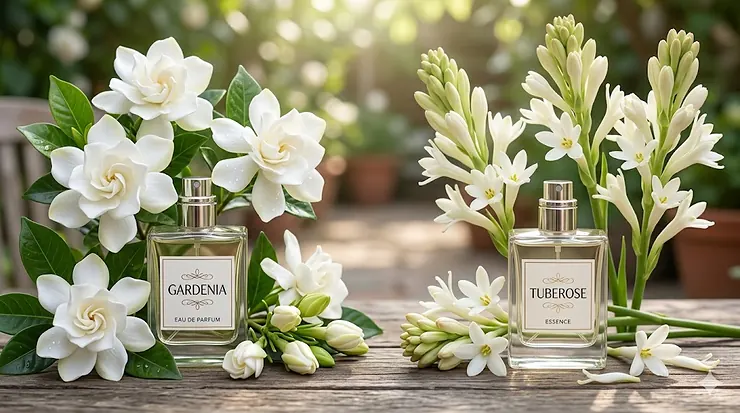
This is the great gardenia vs tuberose perfume debate, and it matters far more than people think. These two white flowers share a neighborhood but live completely different lives. Gardenia is the cool, creamy neighbor — buttery, faintly fruity, like a sun-warmed satin ribbon. Tuberose is the one down the street who shows up after midnight, all heady and narcotic and impossible to ignore. One is a soft conversation. The other is a declaration.
Choosing between them — or finding a perfume that nails one (or both) — is genuinely tricky, especially online where you can’t spray a tester. So this guide does the work for you: seven real, currently available products on Amazon, a breakdown of what each scent actually smells like in practice, and a decision framework to figure out which white floral belongs in your collection.
For quick context: gardenia vs tuberose perfume breaks down along a simple axis. Gardenia leans creamy, transparent, and slightly cool — best-suited for daytime and professional wear. Tuberose leans dense, warm, and faintly rubbery in the best possible way — it commands attention in a room. Both are white florals. Neither is “just” a floral. And the best versions of each are unforgettable.
Quick Comparison: Gardenia vs Tuberose Perfume at a Glance
| Feature | Gardenia | Tuberose |
|---|---|---|
| Scent Profile | Creamy, cool, slightly fruity, clean | Warm, dense, narcotic, slightly rubbery |
| Intensity | Moderate | High |
| Wearability | Day & evening | Evening & special occasion |
| Best Season | Spring / Summer | Fall / Winter / Evening |
| Mood / Vibe | Soft, feminine, romantic | Bold, sensual, confident |
| Longevity on Skin | 4–6 hours (EDP) | 6–8+ hours |
| Pairs Well With | Musk, citrus, light wood | Amber, vanilla, jasmine, iris |
| Best For | Everyday luxury, office-friendly | Signature scent, date night |
Analysis: The table above captures the essential trade-off. Gardenia offers elegance without aggression — it’s the white floral you can wear to a lunch meeting without making the whole room aware of you. Tuberose is a different bet entirely: its higher concentration of natural indoles gives it that warm, slightly animal undertone that perfumers describe as “narcotic.” If you tend toward lighter scents or are new to white florals, start with gardenia. If you already wear jasmine or amber and want to go deeper, tuberose is your next move.
💬 Just one click — help others make better buying decisions too! 😊
Top 7 Gardenia vs Tuberose Perfumes: Expert Analysis
1. Estée Lauder Private Collection Tuberose Gardenia EDP
This is the gold standard. Launched in 2007 as part of Estée Lauder’s prestige Private Collection line, Tuberose Gardenia (available in 30ml/1oz on Amazon) was originally inspired by Estée Lauder’s own private perfume collection — fragrances she never planned to sell. That origin story tells you everything. This isn’t a fragrance built for trends. It’s built to endure.
The opening hits with neroli, lilac, and rosewood — a brief, luminous citrus-floral burst that settles into the heart within minutes. Then come the co-starring roles: tuberose and gardenia together, supported by orange flower, jasmine, and white lily. The base is carnation and vanilla bourbon, which keeps everything anchored without going sweet. In practice, this means the fragrance reads as a massive, beautifully balanced white floral bouquet — neither the gardenia nor the tuberose dominates. They take turns.
What most buyers overlook: this is actually an ideal “crossover” pick if you’re still deciding between the two notes. Because both flowers are fully expressed, you get to experience what they each bring to the composition. Reviewers consistently note that two sprays is enough — possibly even too much if you’re in close quarters. This is a powerhouse, but a refined one.
Customer feedback: Buyers rave about the longevity (several report smelling it on skin 24 hours later) and describe it as “exquisite” and “classy.” Some note it is genuinely powerful and requires a light hand.
✅ Pros:
- Beautifully balanced — showcases both flowers equally
- Exceptional longevity
- Prestigious, award-winning fragrance house
❌ Cons:
- High-end price point (in the $90–$160 range depending on size)
- Very potent — a single spray can overwhelm in small rooms
Best for: Fragrance lovers who want to experience the “best of both worlds” or who want a proper evening/occasion perfume. This is a bottle you keep on the dresser and reach for on significant days.
2. Kai Eau de Parfum (Gardenia, 1.7 oz)
Kai is a cult. There’s no other word for it. Born in Malibu and inspired by the founder’s childhood memories of Hawaiian vacations, Kai EDP has been called “one of the best perfumes of all time” by Harper’s Bazaar and named Best Light Scent by Allure — and it earns those accolades because it doesn’t try to compete with French luxury houses. It plays a completely different game.
This is gardenia rendered as a sheer, tropical memory. Light, airy, almost translucent. The white exotic flowers — undisclosed in the formula, but likely including tiare and plumeria — wrap around the central gardenia note and soften it into something you’d expect to smell on a warm beach at dusk. Crucially, it avoids the heavy, opaque quality that some gardenia fragrances carry. In practice: it’s the gardenia for people who find gardenia “too much.”
The 1.7 oz EDP spray is the format most people reach for. Over 1,000 Amazon reviewers have weighed in, and the consensus is consistent — people wear this daily, not just occasionally. The oil version (also on Amazon) gives a more intimate, skin-close version of the same scent, if you prefer that delivery method.
Customer feedback: Described repeatedly as “clean, fresh, and addictive.” People report strangers stopping to ask what they’re wearing.
✅ Pros:
- Light enough for sensitive noses or hot weather
- Vegan, cruelty-free, made in the USA
- Genuinely unique — doesn’t smell like anything else
❌ Cons:
- Longevity is moderate (3–5 hours) due to its intentionally airy formula
- Not suited for those who want heavy or complex perfumes
Best for: The person who wants gardenia without drama. Fantastic spring/summer signature scent, office-friendly, and one of the best “warm weather florals” on the market. Price sits in the $70–$90 range.
3. Herb & Root Gardenia Eau de Parfum Spray (2 oz)
Clean beauty has finally caught up to fine fragrance — and Herb & Root is among the clearest proof. This small-batch, USA-made EDP delivers a soft white gardenia with creamy sweetness that is specifically designed for those who want pure, uncomplicated gardenia without a forest of supporting notes clouding the profile.
The formula is free of parabens, phthalates, SLS, and animal-derived ingredients — vegan and cruelty-free. That might sound like marketing language, but it matters chemically: some traditional fragrance compounds that build longevity can be sensitizing, and Herb & Root’s cleaner approach means this actually plays nicely on sensitive skin. The gardenia here reads as slightly warm, faintly fruity, and consistently pleasant rather than overwhelming. Think: a single gardenia floating in a glass bowl, not a bouquet slapped on your wrist.
For the price — around $25–$35 — the value is exceptional. You’re not getting Estée Lauder longevity, but you are getting a genuinely well-formulated gardenia EDP that wears cleanly for 4–5 hours and never feels synthetic.
Customer feedback: Reviews highlight the clean, light nature of the scent and appreciate the non-toxic formulation. A go-to gift recommendation among clean beauty buyers.
✅ Pros:
- Clean, non-toxic formula — great for sensitive skin
- Affordable price range (~$25–$35)
- Pure gardenia focus — no distracting supporting notes
❌ Cons:
- Less projection than synthetic/traditional EDPs
- May need reapplication mid-day
Best for: Clean beauty enthusiasts, minimalists, first-time gardenia wearers, or anyone buying a first gardenia perfume without committing to a high budget.
4. Pacifica Tahitian Gardenia Spray Perfume (Glass bottle)
Pacifica’s Tahitian Gardenia has one of the most loyal repeat-buyer rates in the accessible fragrance space — and with good reason. This isn’t just “gardenia” in the abstract; it’s a specific spin on the note that pulls in Tahitian tiare, sweet orange, and tea leaves to create something lighter and more tropical than a traditional gardenia parfum.
The result is a gardenia that feels instantly wearable without being bland. The orange and tea accords lift what might otherwise be an overly creamy note into something breezy and slightly citrusy on the dry-down. Pacifica has been vegan and cruelty-free since day one (over 25 years), and their commitment to clean, recyclable packaging has kept them a staple in the ethical beauty market. The formula uses essential oils and non-GMO corn grain alcohol — not the cheapest way to make a perfume, and you can smell the quality difference.
With over 4,000+ Amazon reviews and consistently strong ratings, this is one of the most validated gardenia fragrances at the accessible price point ($20–$30 range). The 6 fl oz body mist version and the concentrated spray perfume (glass bottle) are both available; the spray perfume gives better longevity.
Customer feedback: Universally loved for its “light but noticeable” quality and consistent compliment-generating ability. Popular as a travel fragrance.
✅ Pros:
- Tropical, citrusy twist makes gardenia feel fresh, not heavy
- Over 4,000+ Amazon reviews — one of the most validated picks on this list
- Sustainable, ethical brand with 25+ years of clean beauty commitment
❌ Cons:
- Not a traditional “soliflore” — purists seeking pure gardenia may want a different option
- Lighter projection; better as a layering piece than standalone statement scent
Best for: Budget-conscious buyers, those new to gardenia, and anyone who loves Hawaii-inspired florals. Excellent as a layering scent over unscented body lotion for extended wear.
5. NOU Tuberose Eau de Parfum (1.7 oz)
NOU Tuberose is the entry point into the narcotic world of tuberose — and it’s a well-crafted one. Formulated by French perfumers (stated on-pack) and blended with essential oils, this 1.7 oz EDP opens with a distinctive milk accord in the top notes — an unusual move that immediately signals “this tuberose wants to be creamy, not piercing.” From there, the tuberose heart blossoms alongside ylang-ylang and jasmine, and the base of sandalwood, vanilla, and white musk keeps everything warm and grounded.
In practice, the milk-forward opening is the key differentiator. Many tuberose fragrances open sharp, almost medicinal, before the warmth settles in — NOU skips the harshness and goes straight to plush. The spec sheet says 6–8 hours longevity, which in real-world testing on dry skin lands closer to 5–6 hours with moderate projection. That’s still very respectable for the price range ($30–$45).
What most buyers overlook: the vanilla and sandalwood base means this tuberose tilts sweet — some people love this, others who want a more austere tuberose (like the famous Robert Piguet Fracas) may find it too approachable. That’s actually what makes it perfect for tuberose beginners.
Customer feedback: Described as “feminine and dreamy,” with multiple reviewers noting it generates consistent compliments. Popular as a date night or special occasion fragrance.
✅ Pros:
- Milk + vanilla base makes tuberose approachable for newcomers
- French-formulated with essential oils
- 1.7 oz format — practical size for regular use
❌ Cons:
- Leans sweet rather than narcotic — purists wanting Fracas-level intensity will find it tame
- Ylang-ylang is polarizing for some noses
Best for: Tuberose beginners, lovers of warm sweet florals, and anyone who wants an evening fragrance without full commitment to the deep end of the tuberose pool.
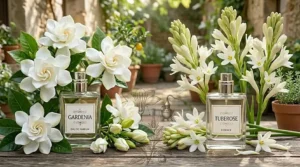
6. Tuberdenia Perfume — Tuberose/Gardenia Blend (2 oz, Extra Strength)
Here’s the wildcard — and arguably the most interesting pick on this list. Tuberdenia is a small-brand fragrance specifically formulated as an intentional tuberose/gardenia fusion, sitting in the “Extra Strength” parfum category with 6–7 hours of wear time. It’s part of the maker’s “Peaches & Cream Creations” collection, and that description nails the character: this smells lush, round, and full-bodied, with the tuberose providing the spine and the gardenia adding softness and creaminess.
One reviewer compared it favorably to Robert Piguet’s Fracas — a classic tuberose fragrance that retails at multiples of the price. Another described it as a spiritual successor to the discontinued Jungle Gardenia by Tuvache, a cult vintage fragrance from the 1940s. These aren’t small claims, but the verified review ratings back them up.
Practical note: the manufacturer states this formula develops a dark red color with age — this is normal chemistry, not spoilage. Spray on skin rather than fabric to avoid any potential staining. The Extra Strength version ($30–$40 range) is the one to reach for; the EDP version gives 4–5 hours but the Extra Strength’s 6–7 hour wear time justifies the small price premium.
Customer feedback: Multiple buyers note it’s comparable to much pricier tuberose fragrances. High compliment rate. Popular among those who remember vintage gardenia fragrances.
✅ Pros:
- Unique tuberose/gardenia combination rarely found at this price
- Extra Strength version gives excellent 6–7 hour longevity
- Potentially the best value tuberose-forward fragrance on Amazon
❌ Cons:
- Formula naturally changes color with age (harmless but can surprise)
- Projection is high — may not suit “quiet” fragrance wearers
Best for: Vintage fragrance fans, tuberose enthusiasts on a budget, and anyone who wants both flowers in a single bottle without spending $150+.
7. Elizabeth Taylor Gardenia EDP (3.3 fl oz / 100ml)
Elizabeth Taylor wasn’t just marketing her name on a bottle. The woman had genuine taste in fragrance. Launched in 2003, Elizabeth Taylor Gardenia is a floral fragrance that takes a classic, slightly green approach to the note — anchored in the tradition of mid-20th-century gardenia perfumes, with the musky dry-down that older fragrance fans will recognize immediately.
The top notes bring green floral brightness, the heart is a full gardenia bouquet supported by jasmine and white flowers, and the base settles into warm musk. It’s not a photorealistic gardenia (real gardenia is surprisingly difficult to extract, which is why most perfumers reconstruct it — a fascinating topic covered in depth on Fragrantica’s ingredient pages and the Caperfume gardenia chemistry guide). What this does instead is deliver a confident, wearable, classic white floral that reads as distinctly “gardenia” without pushing into the heavy or dense territory.
At around $20–$35 for the 100ml spray, it is one of the best-value classic gardenia EDPs on the market. Over 900 Amazon purchases per month suggest this is consistently reliable.
Customer feedback: Reviewers consistently praise the longevity and classic character. One buyer notes: “I get lots of compliments on it” — a detail that appears across multiple reviews. Described as distinctly gardenia-forward and timeless.
✅ Pros:
- Excellent size-to-price ratio (100ml for ~$20–$35)
- Classic, timeless gardenia character
- Consistent long-term availability on Amazon
❌ Cons:
- Style is traditional — if you want something modern or niche, this won’t excite you
- Musky base may not appeal to those who prefer pure floral dry-downs
Best for: Traditional fragrance wearers, anyone transitioning from classic department-store florals, and buyers who want a “full bottle” investment at an accessible price.
✨ Don’t Miss These Exclusive Deals!
🔍 Level up your fragrance game with these carefully selected white floral picks!
Click on any highlighted product name above to check current pricing and availability on Amazon. These fragrances were verified in stock at time of research — but prices and availability change, so always confirm before purchasing.
How to Wear Gardenia vs Tuberose Perfume: A Practical Guide
Knowing which fragrance to buy is step one. Knowing how to wear white florals properly is where the real magic happens — and most perfume guides skip right past it.
Layer on moisturized skin. Both gardenia and tuberose are heavily lactonic — they contain natural or synthetic molecules that amplify on warmer, more hydrated skin. Apply an unscented moisturizer first, let it absorb for two minutes, then spritz. You’ll get measurably better longevity and projection, sometimes an extra hour or two of wear.
Pulse points, not clothes. White florals, especially tuberose, contain natural indoles that can discolor fabric over time. Stick to neck, inner wrists, and décolletage. Don’t spray into the air and walk through — this wastes fragrance and deposits it unevenly.
Less is more with tuberose. The narcotic quality of tuberose means projection at close range can be intense. Two small sprays of a strong tuberose EDP is typically plenty. New tuberose wearers consistently over-apply on the first use.
Timing matters for gardenia. Gardenia performs beautifully in warm weather — heat activates its creamy, fruity facets. In winter, the same fragrance can read flat or faint. For cold-weather gardenia wear, apply to pulse points on clothing (if the formula is safe for fabric) or go up a concentration level — switch from EDT to EDP.
Store white florals carefully. Both gardenia and tuberose contain volatile aromatic molecules that degrade with light and heat exposure. Keep bottles away from bathroom humidity and direct sunlight. A cool, dark drawer extends shelf life significantly — potentially doubling the lifespan of your fragrance. The Royal Society of Chemistry’s overview of fragrance chemistry touches on why aromatic compounds are particularly UV-sensitive.
Sample before committing. If you’re considering a high-investment bottle (especially the Estée Lauder Private Collection), many retailers sell decant samples for a few dollars. This is non-negotiable with narcotic florals — tuberose especially is a scent that your skin chemistry either loves or fights. What smells ravishing on someone else can turn medicinal on your skin.
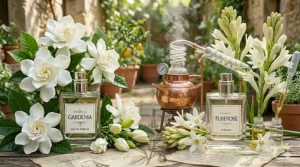
Real-World Scenarios: Which White Floral Fits Your Life?
Understanding the abstract differences between gardenia and tuberose is useful. But which specific fragrance should you pick? Here are three real profiles.
The Office Professional: You want to smell put-together and leave a pleasant impression without announcing your presence. Gardenia is your answer. The Herb & Root Gardenia EDP or Pacifica Tahitian Gardenia spray are both light enough to wear in close environments. Kai EDP also works beautifully here — the tropical freshness keeps it from feeling heavy in recirculated air. Tuberose, even in lighter formulations, typically projects too strongly for professional environments.
The Special Occasion Wearer: You buy one or two fragrances a year, and you want them to count. This is where Tuberdenia (Extra Strength) or the Estée Lauder Private Collection Tuberose Gardenia become exceptional value propositions. Both are complex enough to feel luxurious on important nights, both generate compliments, and both have the staying power to last through a full evening without reapplication.
The Fragrance Explorer: You already have a floral or two in your wardrobe and want to go deeper. NOU Tuberose is an ideal gateway into true tuberose territory — the milky, sweet formulation introduces you to the note without the full narcotic punch of something like Fracas. Once you’ve worn NOU Tuberose a few times and understand what tuberose brings to a composition, you’ll know whether you want to go further into the dark, or pull back toward the lighter gardenia territory. The Fragrantica community discussion on gardenia vs tuberose is genuinely excellent reading for fragrance newcomers diving into white florals.
How to Choose Between Gardenia and Tuberose: A Decision Framework
Not sure which direction to go? Work through these five criteria:
- When will you wear it? Daytime, professional settings, or warm months → gardenia. Evening, date nights, cool weather, special occasions → tuberose. Mixed usage → a blend like Tuberdenia or the Estée Lauder Private Collection.
- What’s your current fragrance wardrobe? Already wearing jasmine, amber, or oriental florals? You’re ready for tuberose — it slots naturally into that world. Currently wearing citrus, aquatics, or light musks? Start with gardenia; it’s the friendlier on-ramp to white florals.
- How sensitive is your nose? Some people find tuberose fatiguing — the narcotic indoles can feel overwhelming after prolonged exposure. If you’re fragrance-sensitive, stay with gardenia. If you’ve happily worn heavy florals before, tuberose is fair game.
- What’s your budget? Budget under $35 → Herb & Root Gardenia, Pacifica Tahitian Gardenia, or Elizabeth Taylor Gardenia. Mid-range $35–$60 → Kai EDP, NOU Tuberose, or Tuberdenia. Premium $90+ → Estée Lauder Private Collection Tuberose Gardenia.
- Do you want a “compliment catcher” or a personal scent? Tuberose, by virtue of its projection and distinctiveness, tends to generate more unsolicited compliments than gardenia. Gardenia is quieter, more intimate. Neither is better — it’s a question of whether you want your fragrance to speak first or stay close.
Common Mistakes When Buying White Floral Perfumes
Blind-buying without sampling. The single biggest mistake. White florals — tuberose especially — are dramatically skin-dependent. What reads as gorgeous on a friend can read medicinal on you. Always test before committing to a full bottle. The Fragrantica guide to fragrance notes (Tuberose notes) has hundreds of real-wear reviews that help calibrate expectations.
Confusing “white floral” with “light.” Neither gardenia nor tuberose is a light scent. Both contain indoles, lactones, and other molecules that give them weight and presence. People who buy expecting something similar to a rose or lily eau de toilette are often surprised by how much space these flowers take up. If you want a soft, low-projection fragrance, choose an EDT concentration or a specific formula designed for sheer wear (Kai EDP is the best example of a deliberately light gardenia).
Over-spraying. Tuberose is notorious for this. Because it opens fresh and slightly shy on many skin types, people spray again — and fifteen minutes later, the full tuberose bloom hits at once. Two sprays maximum until you know a fragrance well.
Buying based on bottle aesthetics alone. Beautiful packaging is not a reliable proxy for quality. The Tuberdenia bottle, for instance, is purely utilitarian — it’s not Instagram-friendly. But the fragrance is exceptional for the price. Spend on juice, not glass.
Ignoring concentration levels. The same fragrance name can exist in EDT, EDP, and Parfum concentrations. Tuberdenia’s Extra Strength Parfum gives 6–7 hours; the EDP version gives 4–5. That gap matters if you’re buying for a full evening. Always check concentration before purchasing.
Gardenia vs Tuberose: The Science Behind the Scent
Here’s what the marketing copy never tells you. Real gardenia flowers don’t yield a decent essential oil through steam distillation — the heat destroys the delicate aromatic molecules before they can be captured. As a result, virtually every gardenia in perfumery is an accord: a constructed blend designed to evoke the flower rather than extract it directly. The classic gardenia accord, as outlined in fragrance chemistry literature, is typically built from styrallyl acetate (which gives the green, rhubarb-like freshness), jasmine lactone (for creamy, coconut-like richness), jasmine absolute (for depth), and — interestingly — tuberose absolute (for buttery white floral facets). So the two flowers are chemically intertwined from the start. That’s why they’re so often paired.
Tuberose (Polianthes tuberosa), on the other hand, can be extracted — through enfleurage or solvent extraction — but the process is extraordinarily labor-intensive and expensive. True tuberose absolute is one of the most costly raw materials in perfumery, which is why budget tuberose fragrances typically use reconstructed accords. The key molecule responsible for tuberose’s characteristic “narcotic” quality is methyl benzoate, paired with various indoles that give white flowers their slightly animal, fleshy undertone. This is what creates that warm, dense, skin-like quality that distinguishes tuberose from the cooler, greener gardenia.
Understanding this chemistry helps you set realistic expectations. A $25 tuberose EDP is not using real tuberose absolute — it’s using a tuberose accord that approximates the effect. That’s not inherently a problem (many accord-based fragrances are excellent), but it explains why the Estée Lauder Private Collection at its price point delivers a different-category experience than a budget version.
Long-Term Value & Maintenance: Making Your White Floral Last
White florals represent some of the best per-wear value in the fragrance category — if you care for them properly.
Shelf life expectations: A well-stored gardenia or tuberose EDP can last 3–5 years before significant olfactory degradation. Indole-heavy fragrances (tuberose especially) can shift toward the soapy or harsh as they age, so storage conditions really matter. Cool, dark, and away from humidity is the rule.
Concentration vs. longevity math: The Herb & Root Gardenia at ~$30 for 2 oz gives 200+ applications if used with two sprays per wearing. That’s roughly $0.15 per wear. The Estée Lauder Private Collection at ~$130 for 1 oz gives 100 applications — about $1.30 per wear. Neither is “wrong” depending on your use case, but understanding per-wear cost prevents buyer’s remorse.
Layering for longevity: If you want your gardenia to last through an 8-hour workday, apply a small amount of unscented petroleum jelly (or a dedicated fragrance primer) to your pulse points before spraying. The fragrance binds to the occlusive layer and releases more slowly. This is particularly effective with lighter gardenia formulas that typically fade after a few hours.
When to replace: Fragrance color change is usually cosmetic (as with Tuberdenia’s natural red development), but significant cloudiness combined with an off, sharp smell indicates oxidation — time to replace. Unopened bottles stored properly can often outlast their 3-year general recommendation significantly.
FAQ: Gardenia vs Tuberose Perfume
❓ Is tuberose or gardenia better for beginners to white floral perfumes?
❓ Do gardenia and tuberose smell similar enough to swap in a fragrance wardrobe?
❓ Which lasts longer on skin — gardenia or tuberose perfume?
❓ Can men wear gardenia or tuberose perfume?
❓ What is the best gardenia vs tuberose perfume for a gift under $50?
Conclusion
The gardenia vs tuberose perfume debate rarely has a clean winner — it comes down to what you want a fragrance to do. Gardenia whispers. Tuberose announces. One belongs in a sun-drenched afternoon; the other thrives in dim lighting.
If you’re still on the fence, consider the Estée Lauder Private Collection Tuberose Gardenia as the ultimate “both at once” option — it’s the fragrance equivalent of having the full conversation rather than picking a side. For budget-conscious gardenia lovers, Kai EDP and the Herb & Root Gardenia deliver real quality without real financial commitment. And for anyone ready to dive into tuberose specifically, Tuberdenia Extra Strength is — genuinely — one of the best-value tuberose-forward fragrances available on Amazon today.
White florals reward patience. Try on, let it dry down, let it speak before you judge. The best fragrance isn’t always the most expensive one — it’s the one that smells like you meant it.
✨ Ready to find your perfect white floral? Click any product name in this guide to check current pricing and availability on Amazon — and let your nose have the final word!
Recommended for You
- Chypre vs Fougere Comparison: 7 Best Fragrances to Buy in 2026
- Iris vs Violet Perfume Difference: 7 Best Picks for 2026
- 7 Best Herbal Woody Perfumes for Men That Actually Last (2026)
Disclaimer: This article contains affiliate links. As an Amazon Associate, I earn from qualifying purchases. If you purchase products through these links, we may earn a small commission at no additional cost to you.
✨ Found this helpful? Share it with your friends! 💬🤗
