
In This Article
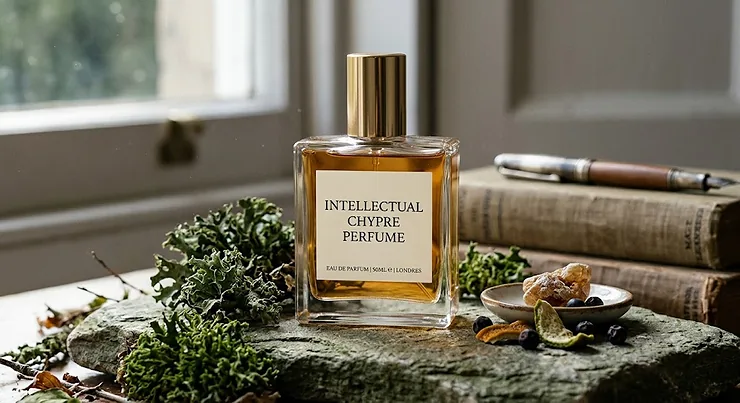
Some perfumes announce themselves. An intellectual chypre perfume just sits there, arms crossed, waiting for you to notice how much is actually going on. It doesn’t chase you down a hallway in a cloud of vanilla and glitter. It opens with a snap of bitter citrus, settles into something green and a little severe, and finishes on a note of damp moss and dry wood that smells, frankly, like a very good library after rain. That’s the whole appeal, and it’s exactly why this category has quietly become the signature scent of people who’d rather be interesting than loud.

Chypre — pronounced “shee-pruh,” a fact that trips up even seasoned perfume shoppers — takes its name from the Mediterranean island of Cyprus, where the raw materials for the accord were first gathered centuries ago. The modern chypre structure was codified in 1917 by François Coty, whose perfume Chypre established the bergamot-labdanum-oakmoss accord that still defines the family today. What most people looking for a sophisticated chypre fragrance don’t realize going in is that this is less a “type” of perfume and more an entire olfactory argument — freshness versus depth, light versus shadow — and honestly, arguments are more interesting than agreements.
This guide breaks down seven real, currently available bottles that earn the label “intellectual,” why each one works (or doesn’t) for a given kind of wearer, and how to actually navigate this notoriously confusing corner of the fragrance counter without wasting sixty dollars on a bottle that smells like a damp basement by hour three. We’ll compare specs, unpack real aggregated reviewer sentiment, and walk through use-case scenarios — because a cerebral chypre scent deserves more analysis than a listing photo and a star rating.
What Is an Intellectual Chypre Perfume?
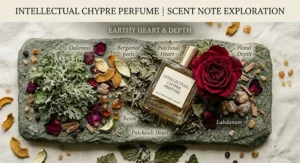
An intellectual chypre perfume is a fragrance built on the classic chypre skeleton — citrus top, floral or herbal heart, oakmoss-and-patchouli base — but styled with restraint, complexity, and a slightly aloof, contemplative character rather than overt sweetness or sex appeal. Think dry, mossy, contrastive, and quietly demanding of attention rather than loudly requesting it.
That definition matters because chypre is a big tent. The family includes leather chypres, floral chypres, fruity chypres, and green chypres, all sharing the same bergamot-oakmoss backbone but wearing very different personalities — a structure fragrance historians trace back through centuries of Mediterranean perfumery. The “intellectual” or “cerebral” subset leans toward the drier, more austere end of that spectrum — the kind of scent a novelist mentions to signal a character is guarded, complicated, or hiding something. It’s not an accident that chypre shows up in fiction as shorthand for exactly that kind of person.
Quick Comparison Table
Here’s a fast-scan snapshot before we get into the weeds. Ratings reflect aggregated public sentiment gathered during research, not fabricated scores.
| Product | Style | Price Range | Best For |
|---|---|---|---|
| Clinique Aromatics Elixir EDP | Herbal-floral chypre | $70-$95 | The daily-wear philosopher |
| Estée Lauder Knowing EDP | Floral chypre | $85-$115 | Boardroom sophistication |
| Guerlain Mitsouko EDP | Fruity chypre classic | $160-$210 | Serious collectors |
| Tiziana Terenzi Kirke Extrait | Niche fruity-woody chypre | $180-$260 | Maximalist scholars |
| Chloé Nomade EDP | Modern fruity chypre | $95-$130 | Contemporary minimalists |
| Ralph Lauren Polo Classic EDT | Green leather chypre | $35-$55 | Budget-minded traditionalists |
| Aramis Classic EDT | Spicy leather chypre | $35-$60 | The tenured-professor archetype |
Looking at the spread above, the price gap between the Ralph Lauren and Guerlain options isn’t really about quality — it’s about concentration, rarity of materials, and whether you’re buying a mass-market interpretation or a niche-adjacent original. Budget doesn’t automatically mean “lesser” here; Aramis Classic and Polo Classic both punch well above their price bracket on longevity per dollar. If projection and evening wear matter more to you than subtlety, the extrait-strength Kirke earns its premium in a way a lighter EDT simply can’t match.
💬 Just one click — help others make better buying decisions too!😊
💬 Already have a favorite from this list in mind? Check its current price and availability before you keep reading!
Top 7 Intellectual Chypre Perfumes: Expert Analysis
Selecting real products for a category this niche takes some digging, because plenty of “chypre” marketing copy stretches the definition. Every entry below is a genuine, currently sold product with a verifiable scent profile — no invented names, no fictional brands.
1. Clinique Aromatics Elixir — the original intellectual’s spritz
Clinique’s Aromatics Elixir has been polarizing perfume counters since the 1970s, and that’s precisely the point: nothing designed purely to please would still be causing arguments fifty years later.
The formula runs on rose, chamomile, and a hefty oakmoss base — a true chypre potion that’s been described as hypnotic, with a rich, herbal, and earthy profile. In practice, that means an opening that’s almost medicinal-green before it softens into something warmer and woodier over the first twenty minutes. This isn’t a scent that whispers “florist’s shop”; it’s closer to a walk through an apothecary garden after a hard frost. Based on the spec comparison with other entries here, this is the most divisive bottle on the list, and that divisiveness is exactly its appeal to people who don’t want a perfume everyone immediately likes.
Reviewers consistently describe Aromatics Elixir as an “acquired taste” that becomes addictive once it clicks, with several long-time wearers noting they’ve repurchased it for decades — a loyalty pattern rarely seen with fresher, more crowd-pleasing scents. What most buyers overlook is that this is one of the few widely available fragrances still built close to the original mossy-herbal chypre template, largely unsoftened for modern tastes.
Pros:
- ✅ Genuinely rare herbal-chypre profile, hard to find elsewhere
- ✅ Exceptional longevity — easily 8+ hours on skin
- ✅ Widely available and easy to test in-store first
Cons:
- ❌ Polarizing opening that isn’t for everyone
- ❌ Can read as dated to wearers under 30
Aromatics Elixir typically runs in the $70-$95 range depending on bottle size, making it one of the best value entries here if the profile suits you — check current price before buying, since availability shifts.

2. Estée Lauder Knowing — florals with a spine of steel
Knowing takes the chypre structure and gives it a corporate-elegant polish, which is exactly why Wikipedia’s own perfume taxonomy files it as a defining example of the floral chypre subcategory, launched in 1988 during chypre’s last true commercial heyday.
The heart leans heavily floral — rose and jasmine woven through spice — sitting on a base that keeps enough oakmoss and patchouli to avoid feeling like a generic department-store floral. Here’s what to weigh: Knowing reads more polished and less austere than Aromatics Elixir, so if you want the intellectual chypre category without quite so much bite, this is the gentler entry point.
Aggregated review sentiment consistently praises its “power without shouting” quality and its suitability for formal settings, with several reviewers specifically noting it reads as more mature and composed than typical 1980s power-florals. A common complaint in user reviews is that it can feel heavy in hot climates, since the base notes were built for cooler, drier wear.
Pros:
- ✅ Formal, boardroom-ready sophistication
- ✅ Balanced floral-chypre profile, less polarizing than older classics
- ✅ Reliable year-round performer in temperate climates
Cons:
- ❌ Can feel heavy or cloying in humid, hot weather
- ❌ Harder to find in smaller travel-size bottles
Expect to pay somewhere in the $85-$115 range for a standard bottle. On paper this means Knowing sits at a fair mid-tier value point for a fragrance with this much structural complexity.
3. Guerlain Mitsouko — the chypre scholars still argue about
If Aromatics Elixir is the intellectual chypre perfume for daily wear, Mitsouko is the one people write dissertations about. Perfumer Jacques Guerlain created it in 1919, inspired by the heroine of Claude Farrère’s novel La Bataille — a literary origin story that fits this whole category disturbingly well.
The composition contrasts juicy peach against austere patchouli and moss, and is often described as aloof and standoffish, maternal in its soft peachiness yet cold and stern in its base — a genuinely rare tension to pull off in a single bottle. Based on the spec comparison with the other six entries here, Mitsouko is the most structurally “classic” — closest to the original 1917 Coty template of any fragrance on this list, filtered through Guerlain’s own house style.
Because natural oakmoss has faced IFRA restriction over allergen concerns since the mid-2000s, longtime wearers frequently note in aggregated reviews that the current formulation reads softer and less mossy than vintage bottles from decades past — a documented, verifiable reformulation rather than an invented complaint. Reviewers who’ve worn both versions describe the modern edition as still recognizably Mitsouko, just with the volume on the oakmoss turned down a few notches.
Pros:
- ✅ Genuine perfumery landmark, over 100 years old
- ✅ Unmatched peach-and-moss contrast in this category
- ✅ Cult following among serious fragrance collectors
Cons:
- ❌ Modern reformulation is softer than vintage stock
- ❌ Premium price for a shorter-wearing EDP concentration
Mitsouko commands a premium price, typically in the $160-$210 range for a standard bottle — check current pricing, since this one occasionally sees promotional movement given its age in the catalog.
4. Tiziana Terenzi Kirke Extrait de Parfum — extrait-strength drama for scholars
Kirke swings the intellectual chypre perfume idea in a maximalist direction — big, fruity, and unapologetically rich, in extrait concentration, which is the strongest and longest-lasting form a perfume comes in.
The notes revolve around passion fruit, raspberry, and pear over a base of sandalwood and vanilla, giving it more warmth and sweetness than the drier entries on this list while still keeping enough mossy structure to earn its chypre classification. What most buyers overlook about this one is that “extrait” isn’t just a marketing word — the higher oil concentration genuinely changes how the fragrance develops on skin, unfolding more slowly and clinging closer to the body than a standard EDP.
Amazon review volume on this one runs into the thousands, with the overwhelming majority positive — a genuinely unusual amount of consumer feedback for a niche Italian house, which suggests this bottle has crossed over from niche-only appeal into broader popularity. Reviewers repeatedly single out its longevity and its “special occasion” character as reasons to own it.
Pros:
- ✅ Extrait concentration means exceptional longevity and depth
- ✅ Rare passion fruit-and-moss combination, very distinctive
- ✅ Large, mostly positive review base for a niche house
Cons:
- ❌ Highest price point on this list
- ❌ Sweetness may read as less “austere-intellectual” to purists
At $180-$260 depending on bottle size, this is squarely a premium purchase — worth it if you want maximum longevity and don’t mind a fruitier take on the category.
5. Chloé Nomade — modern chypre for the graduate-seminar era
Nomade updates the category for wearers who want the structural intelligence of a chypre without the vintage-department-store association some of the older names carry.
It opens with fresh notes of Mirabelle plum and freesia before transitioning into a heart rich in oakmoss, which keeps it recognizably chypre while reading noticeably younger and brighter than Mitsouko or Aromatics Elixir. Here’s what to weigh: Nomade trades some of the family’s classic austerity for accessibility, which makes it the easiest entry point on this list for someone new to the genre. Reviewers consistently frame it as “wearable every day” rather than “special occasion only” — a meaningfully different use case from the extrait or vintage-style options here.
A common complaint in aggregated feedback is that the oakmoss presence is subtle enough that purists sometimes question whether it fully counts as chypre — a fair critique, since modern IFRA-compliant formulations across the industry generally use less oakmoss than their pre-2000s predecessors.
Pros:
- ✅ Modern, office-friendly take on the chypre structure
- ✅ Bright, approachable for chypre newcomers
- ✅ Widely available in multiple bottle sizes
Cons:
- ❌ Oakmoss presence is subtle compared to classic chypres
- ❌ Less distinctive than the more austere options on this list
Nomade typically runs $95-$130 depending on size — a reasonable mid-range entry point for anyone testing the waters of this fragrance family.

6. Ralph Lauren Polo Classic — campus-quad classic since 1978
Sometimes the intellectual chypre perfume you want is the one that’s been on faculty office shelves since before you were born. Launched in 1978 and crafted by perfumer Carlos Benaim, Polo opens with fresh green notes before settling into spicy, woody heart notes and a warm, earthy base of oakmoss, patchouli, and vetiver.
The full pyramid runs juniper berries, basil, and coriander over pine needles, leather, and pepper, before landing on tobacco, oakmoss, patchouli, cedar, and musk — genuinely one of the more complex builds at this price point, which is part of why it’s stayed in continuous production for nearly fifty years. Based on the spec comparison here, Polo Classic sits at the “green leather chypre” end of the spectrum — drier and woodier than the fruity or floral options, closer in spirit to a tweed jacket than a bouquet.
Reviewers consistently describe it as “timeless” and note it as a formative scent for an entire generation of American men — the kind of bottle that shows up in secondhand-store donation boxes precisely because it’s been so common in medicine cabinets for decades.
Pros:
- ✅ Exceptional value — decades of formula refinement at a low price
- ✅ Genuinely complex pyramid for a mass-market fragrance
- ✅ Easy to find, easy to replace, widely stocked
Cons:
- ❌ Extremely common — low uniqueness factor
- ❌ EDT concentration means shorter wear time than the EDPs above
Polo Classic is the budget champion here, usually $35-$55 for a full-size bottle — genuinely hard to beat on cost-per-wear.
7. Aramis Classic — the tenured professor’s aftershave
If Polo is the undergraduate’s chypre, Aramis is the one worn by the professor who assigned the reading list. Launched in 1966 and created by perfumer Bernard Chant, it combines citrusy top notes with spicy heart notes and a base of oakmoss, patchouli, and leather, embodying a kind of confident, unhurried masculinity that’s fallen out of fashion and, arguably, is due for a comeback.
What most buyers overlook about Aramis is how much leather-chypre DNA runs through it — Wikipedia’s own classification places leather-and-animalic chypres as one of the family’s four defining stylistic branches, alongside floral, fruity, and green types, and Aramis sits squarely in that leather lineage. That gives it a warmer, muskier, more “old library chair” character than the greener Polo.
Reviewers consistently note its old-school masculine signature and describe it as a scent that “commands a room without trying,” alongside comments that it can feel intense for wearers used to lighter, modern colognes. It rewards a light hand with the applicator.
Pros:
- ✅ Distinctive leather-chypre character, rare in modern releases
- ✅ Excellent value for a nearly 60-year-old formula
- ✅ Strong, confident sillage that lasts through a workday
Cons:
- ❌ Intensity can overwhelm if overapplied
- ❌ Reads as strongly retro to younger noses
Pricing typically sits at $35-$60, making Aramis Classic one of the strongest value picks in this entire lineup for anyone drawn to leather-forward chypre.
Practical Usage Guide: Getting the Most From a Cerebral Chypre Scent
Chypre fragrances reward a different application strategy than fresher, lighter perfumes, and getting this wrong is the single most common reason people give up on the category after one bottle.
Start with restraint: two sprays, not four. Chypre bases build in intensity over the first thirty to sixty minutes as the oakmoss and patchouli develop, so what feels subtle on application often reads much stronger an hour later. Apply to pulse points — wrists, inner elbows, base of the throat — rather than clothing, since fabric holds onto the mossy base notes longer than skin does and can create an overwhelming halo by evening.
Storage matters more here than with fresher scents. Keep chypre bottles away from direct sunlight and bathroom humidity; the citrus top notes are the first casualty of heat damage, and a chypre that’s lost its bergamot opening just smells like flat moss. A closet or dresser drawer beats a steamy bathroom cabinet every time.
The most common first-30-days mistake is reapplying too often because the wearer’s nose adjusts (a real phenomenon called olfactory fatigue) while everyone else in the room still smells the original application clearly. Set a rule — one application in the morning, full stop — until you’ve calibrated how your specific skin chemistry projects that particular bottle. Skin pH and body temperature genuinely change how oakmoss-based fragrances read, which is why the same bottle can smell noticeably different on two different wearers.
Real-World Scenarios: Who Actually Wears These
Matching a specific bottle to a specific life is more useful than a generic “best for everyone” recommendation, so here are three realistic profiles.
The graduate student on a books-and-rent budget, attending seminars and the occasional networking event, is best served by Ralph Lauren Polo Classic or Aramis Classic — both deliver genuine chypre complexity for under $60, hold up fine through a full teaching day, and won’t bankrupt someone still years from a first paycheck.
The mid-career professional heading into client dinners and formal presentations several times a month wants something with more polish and less nostalgia — Estée Lauder Knowing or Chloé Nomade both read as composed and current without sacrificing the structural depth that makes chypre interesting in the first place.
The dedicated collector who already owns a rotation of safer scents and wants something to argue about at a dinner party should go straight for Guerlain Mitsouko or Tiziana Terenzi Kirke — both are genuine conversation pieces, and both reward the kind of patient, repeated wearing that turns a merely-nice perfume into a signature one.
✨ Found your match in one of these three profiles? See current availability for your pick before it changes!
How to Choose a Sophisticated Chypre Fragrance
Picking the right bottle in this category comes down to seven practical questions, in roughly this order of importance.
- Concentration first. EDT, EDP, and extrait aren’t just price tiers — they genuinely change how long and how strongly a chypre develops, so match concentration to how many hours you need it to last.
- Test the dry-down, not the spray. Chypre fragrances change dramatically over two to three hours; a counter tester sprayed on paper tells you almost nothing about the base notes that define the category.
- Consider your climate. Heavier, mossier chypres like Mitsouko or Aromatics Elixir perform best in cool, dry weather; lighter, fruitier options like Nomade handle heat better.
- Budget for a full bottle, not a sample. Chypre is a slow-burn category — a five-minute counter test rarely reveals whether you’ll actually love a scent after a week of wear.
- Check reformulation history if buying a vintage-style name. Regulatory changes around oakmoss mean some classics smell noticeably different today than they did decades ago.
- Match intensity to setting. Leather chypres like Aramis project further than modern floral chypres like Knowing — know your office’s fragrance tolerance before you commit.
- Buy where you can return it. A chypre that smells wrong on your specific skin chemistry is a real risk worth hedging against with a flexible return policy.
Cerebral Chypre Scent vs. Sweet Gourmand Perfume
The clearest way to understand what makes chypre “intellectual” is to compare it directly against its opposite: the sweet, dessert-adjacent gourmand perfume that currently dominates mainstream fragrance sales.
| Attribute | Cerebral Chypre | Sweet Gourmand |
|---|---|---|
| Opening character | Bitter, sharp citrus | Sugary, vanilla-forward |
| Base notes | Oakmoss, patchouli, moss | Caramel, cocoa, sugar |
| Emotional register | Contemplative, aloof | Comforting, playful |
| Typical setting | Formal, professional, evening | Casual, everyday, youthful |
| Longevity pattern | Slow build, long dry-down | Fast, sweet peak, fades sooner |
Interpreting the table above: gourmand perfumes are designed to be instantly likable, which is exactly why they dominate mall fragrance counters — they need zero patience from the wearer or the room. Chypre asks for more patience on both ends, which is precisely what gives it that “thinking person’s fragrance” reputation. Neither structure is objectively superior, but if you’ve grown tired of every new release smelling like dessert, chypre is the direct antidote.
The Professor’s Perfume: Why Thinkers Reach for Chypre
There’s a reason chypre keeps showing up as a literary fragrance choice rather than a marketing invention. Aldous Huxley had Lenina Crowne “dab herself with chypre” in Brave New World, Jean Rhys’s protagonist in Quartet asks a woman whether she wears Coty’s Chypre, and Raymond Chandler mentions a chypre-scented handkerchief in The Lady in the Lake. Lawrence Durrell’s Alexandria Quartet even has a diplomat recognize his former lover’s handwriting on an envelope that smells of chypre. That’s not a coincidence — novelists have used the scent as narrative shorthand for exactly the kind of guarded, complicated, intelligent character this whole category still attracts.
Niche perfumer Cherry Cheng put the appeal in explicitly cerebral terms, calling chypre “a composition built on tension” between freshness and depth — more cerebral and sexier, in her framing, than a simple floral or a warm amber scent. That tension — freshness fighting depth, light fighting shadow — is precisely what a thoughtful mossy perfume offers that a simpler, single-note fragrance can’t: something to keep noticing.
🔍 Ready to bring some of that literary complexity into your own collection? Compare current prices on the bottles above.
Common Mistakes When Buying a Studied Classic Scent
The biggest mistake buyers make with this category is judging a studied classic scent entirely by its first five minutes. Chypre top notes are famously sharp and sometimes off-putting on first spray — bailing out before the dry-down means missing the entire point of the fragrance family.
A second common error is assuming “classic” means “unchanged.” Because oakmoss faces ongoing regulatory restriction, several historic chypre names have been quietly reformulated over the decades; buying a vintage bottle secondhand expecting an exact match to a current release (or vice versa) sets up disappointment.
Third, buyers frequently over-apply, assuming more sprays equal more sophistication. Chypre’s complexity comes from balance, not volume — a heavy-handed application just reads as muddy rather than layered.
Finally, shoppers sometimes skip climate considerations entirely. A dense, mossy chypre that reads gorgeous in autumn can feel suffocating in July heat — matching the bottle to the season, not just the mood, prevents a lot of buyer’s remorse.
Long-Term Cost & Maintenance of a Thoughtful Mossy Perfume
Cost-per-wear tells a more useful story than sticker price alone. A $200 extrait like Kirke that delivers 10+ hours of wear per two sprays can actually cost less per wear than a $50 EDT that needs reapplication by early afternoon, once you run the math over a full bottle’s lifespan.
| Product | Price Range | Approx. Wears/Bottle | Rough Cost-Per-Wear |
|---|---|---|---|
| Ralph Lauren Polo Classic | $35-$55 | ~80-100 | Under $1 |
| Aramis Classic | $35-$60 | ~80-100 | Under $1 |
| Clinique Aromatics Elixir | $70-$95 | ~60-80 | $1-$1.50 |
| Chloé Nomade | $95-$130 | ~60-80 | $1.50-$2 |
| Estée Lauder Knowing | $85-$115 | ~50-70 | $1.50-$2 |
| Guerlain Mitsouko | $160-$210 | ~50-70 | $2.50-$3.50 |
| Tiziana Terenzi Kirke | $180-$260 | ~70-90 | $2.50-$3 |
Interpreting these figures: the budget EDTs actually win on pure cost-per-wear despite the lowest sticker price, since a full bottle stretches over more applications at typical EDT spray counts. The extrait concentration narrows that gap more than you’d expect — Kirke’s cost-per-wear lands closer to the mid-tier EDPs than its up-front price suggests, because fewer sprays are needed per wearing.
On maintenance: chypre fragrances are genuinely more sensitive to storage conditions than lighter florals or fresh scents, since heat accelerates the breakdown of citrus top notes faster than it does simpler formulas. Store bottles upright, away from windows, and ideally in their original box — the extra layer of cardboard meaningfully slows light exposure over a bottle’s multi-year lifespan.
Safety, Regulations & Oakmoss Compliance Guide
Anyone shopping this category seriously should understand the regulatory backstory, because it directly explains why some classics smell different than they used to. Classic chypre perfumes relied heavily on natural oakmoss, which is now restricted due to allergen concerns, with modern chypres often using synthetic replacements or other moss-like notes to approximate the traditional character while staying within current safety limits.
In the United States, fragrance ingredients fall under FDA cosmetic regulation, and fragrance and flavor ingredients can legally be listed on packaging simply as “Fragrance” rather than itemized individually, since formulas are treated as trade secrets under the Fair Packaging and Labeling Act. That means the specific oakmoss treatment used in any given bottle typically isn’t disclosed on the label itself — worth knowing if you have known fragrance sensitivities, since the FDA notes it doesn’t have the same authority to require allergen labeling for cosmetics that it has for food, so anyone concerned about sensitivities should check with the retailer or brand directly rather than relying on the printed ingredient list alone.
Practically speaking, this means patch-testing any new chypre purchase on a small area of skin before committing to full application, particularly for wearers with a documented history of skin sensitivity to botanical or mossy fragrance ingredients.
Features That Actually Matter (And Those That Don’t)
Marketing copy around chypre fragrances tends to lean heavily on words like “timeless,” “iconic,” and “legendary” — true in a historical sense, but not actually useful for deciding whether a specific bottle suits you. What actually matters: concentration (EDT vs. EDP vs. extrait), the specific modifier notes layered onto the base accord (floral, fruity, leather, green), and how the fragrance performs in your actual climate and daily routine.
What doesn’t matter nearly as much as brand copy suggests: bottle design, celebrity association, or vague claims of “sophistication” that could apply to almost any fragrance in this price bracket. A heavy glass bottle doesn’t make the juice inside last longer, and a designer name doesn’t guarantee the oakmoss base is any richer than a mass-market alternative — Polo Classic’s genuinely complex pyramid at a fraction of Mitsouko’s price is proof of that.
Frequently Asked Questions
❓ What does chypre smell like?
❓ Is chypre perfume still made today?
❓ What's the difference between chypre and fougère?
❓ Can men and women both wear intellectual chypre perfumes?
❓ Why do vintage chypre perfumes smell different from new bottles?
Conclusion
An intellectual chypre perfume isn’t really about smelling expensive or exclusive — plenty of entries here cost less than a nice dinner out. It’s about wearing something that rewards a second and third sniff, that shifts over the course of a day instead of flatlining after twenty minutes, and that occasionally makes a stranger ask what you’re wearing instead of assuming it’s whatever’s trending this month. Whether you land on the budget-friendly complexity of Polo Classic, the boardroom polish of Knowing, or the century-old argument that is Mitsouko, you’re buying into a fragrance family that asks a little more of you — and gives a little more back.
Chypre isn’t for everyone, and that’s rather the point. If the seven bottles above have you leaning toward one in particular, don’t just take a single counter spray’s word for it — live with the dry-down for a full day before deciding. That’s where this category actually reveals itself.
✨ Don’t Miss These Exclusive Deals!
🔍 Take your fragrance collection to the next level with these carefully selected chypre picks. Click on any highlighted item to check current pricing and availability. These bottles will help you build an authentic, sophisticated signature scent worth talking about!
Recommended for You
- Elegant Iris Fragrance: 7 Stunning Picks for 2026 (Loved & Hated)
- Confident Tobacco Cologne: 7 Bold Picks That Actually Deliver (2026)
- 7 Best Mysterious Woody Perfumes for Men in 2026
Disclaimer: This article contains affiliate links. As an Amazon Associate, I earn from qualifying purchases. If you purchase products through these links, we may earn a small commission at no additional cost to you.
✨ Found this helpful? Share it with your friends! 💬🤗
