
In This Article
You’ve probably noticed her from across the room—not because she’s loud, but because her presence feels different. There’s an elegant mystery, a sophisticated depth that somehow lingers even after she’s gone. What most people overlook is that this magnetic quality often comes bottled in a chypre fragrance, a scent family that’s been quietly defining refinement since 1917.
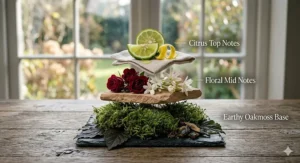
The best chypre fragrance isn’t about following trends or smelling like everyone else at brunch. It’s about wearing something that actually has a backbone—an architectural composition built on bergamot, oakmoss, and patchouli that somehow manages to be both earthy and elevated at the same time. While your coworker is drowning in vanilla clouds, you’re the one people remember.
Named after the French word for Cyprus (pronounced “sheep-ra,” not “chip-ray”), chypre fragrances originated from François Coty’s groundbreaking 1917 perfume that revolutionized how we think about scent construction. According to the Perfume Society, these fragrances are characterized by warm and dry compositions built around a woody, mossy accord of bergamot, oakmoss, patchouli and labdanum. What makes them remarkable is their chameleon-like versatility—fruity chypres like Mitsouko, green chypres like Chanel No. 19, or leather chypres like Bandit all share this distinctive DNA while expressing completely different personalities.
What Is Best Chypre Fragrance?
The best chypre fragrance is a sophisticated perfume family characterized by a distinctive accord of citrus bergamot top notes layered over a deep, earthy base of oakmoss, patchouli, and labdanum. These fragrances balance fresh brightness with woody depth, creating a timeless elegance that feels both grounded and refined. Unlike sweet floral or vanilla-heavy scents, chypres deliver complexity through contrasting elements—the sparkle of bergamot against the mustiness of oakmoss creates an intriguing tension that mature noses appreciate. The category includes fruity chypres (peachy Mitsouko), green chypres (crisp No. 19), and floral chypres (elegant Knowing), making them adaptable to different moods while maintaining that signature mossy-woody sophistication.
Quick Comparison: Top Chypre Fragrances at a Glance
| Fragrance | Chypre Type | Best For | Price Range | Longevity |
|---|---|---|---|---|
| Guerlain Mitsouko | Fruity Chypre | Autumn elegance, peach lovers | $95-$140 | 8-10 hours |
| Clinique Aromatics Elixir | Woody Chypre | Bold individualists, cold weather | $45-$85 | 10-12 hours |
| Halston Classic | Floral Chypre | Vintage sophistication, evening wear | $25-$45 | 6-8 hours |
| Estée Lauder Knowing | Rose Chypre | Confident women, fall/winter | $60-$110 | 8-10 hours |
| Paloma Picasso | Animalic Chypre | Seduction, special occasions | $35-$75 | 10+ hours |
| Chanel No. 19 | Green Chypre | Spring freshness, office wear | $110-$150 | 6-8 hours |
| Rochas Femme | Fruity Chypre | Classic elegance, gourmand twist | $30-$65 | 7-9 hours |
Looking at this comparison, Guerlain Mitsouko remains the gold standard if you want the most complex fruity chypre experience, though at premium pricing. For value seekers who prioritize longevity, Clinique Aromatics Elixir delivers impressive 10-12 hour wear at nearly half the cost. Meanwhile, Halston Classic presents an accessible entry point under $50 for those testing whether chypre fragrances suit their chemistry. The green lovers will find Chanel No. 19 worth the splurge for its unmatched galbanum crispness, while Paloma Picasso’s animalic intensity justifies its mid-range price for evening drama.
💬 Just one click — help others make better buying decisions too! 😊
Top 7 Best Chypre Fragrance: Expert Analysis
1. Guerlain Mitsouko Eau de Parfum — The Fruity Chypre Masterpiece
Guerlain Mitsouko stands as perfumery royalty—a 1919 creation by Jacques Guerlain that essentially invented the fruity chypre category and has been inspiring knock-offs ever since. This isn’t just historical; the current formulation still delivers that signature peachy-oakmoss complexity that makes fragrance experts lose their composure.
The magic happens in the tension between a velvety peach accord (not candied, think: skin of a ripe peach with slight fuzz) and a dark, mysterious base of oakmoss, vetiver, and spices. What most buyers overlook about this perfume is how it transforms throughout wear—the opening citrus-jasmine brightness gives way to that iconic peach heart, then settles into an almost smoky, incense-tinged drydown that can last through an entire workday and dinner after. The 2.5 oz EDP concentration strikes the best balance between projection and sophistication.
According to Wikipedia, Mitsouko is classified among fruity chypres and was created by Jacques Guerlain in 1919, making it one of the earliest examples of pairing fruit notes with traditional chypre structure. Customer feedback consistently praises its “smoky and mysterious” character with “incredible longevity” lasting 8-10 hours even after showering. Some note the reformulation from vintage versions, but most agree the modern Mitsouko still captures essential elegance.
Who this is for: The woman who wants something truly distinctive for autumn and winter—someone tired of safe choices who’s ready for a fragrance with actual personality. If you appreciate complexity over simplicity and aren’t afraid of turning heads, Mitsouko rewards that confidence.
Pros:
✅ Unparalleled complexity that evolves beautifully over 8+ hours
✅ Iconic peach-oakmoss combination that defined a category
✅ Sophisticated enough for formal occasions yet wearable daily
Cons:
❌ Higher price point in the $95-$140 range for 2.5 oz
❌ Not beginner-friendly—takes time to appreciate the nuances
Price & Value: Available in the $95-$140 range depending on retailer and size. While premium-priced, the concentration and longevity mean you use less per application. Consider this an investment piece rather than an impulse buy.
2. Clinique Aromatics Elixir Eau de Parfum — The Woody Powerhouse
Clinique Aromatics Elixir launched in 1971 as a deliberate middle finger to conventional femininity, and nearly 55 years later, it’s still one of the most unapologetically bold chypres you can wear. Created by Bernard Chant, this woody-chypre leans heavily into chamomile, patchouli, and oakmoss with an intensity that either makes you its devoted follower or sends you running.
The key specification here is the EDP concentration—significantly more powerful than the EDT version, delivering 10-12 hours of serious sillage. What the spec sheet won’t tell you is how this performs in practice: the opening chamomile can read almost medicinal (think herbal tea, not floral bouquet), but give it 15 minutes and you’re rewarded with this magnificent woody-floral symphony where rose, jasmine, and ylang-ylang dance over a dark patchouli-vetiver base. The oakmoss gives it that classic chypre dryness, while Bulgarian rose adds just enough softness to keep it from becoming overly austere.
Customer reviews reveal polarizing reactions—those who love it describe it as “intoxicating” and “powerful,” while detractors find it “too intense” or “old-fashioned.” One longtime wearer noted she’s been using it since the 1980s and still receives compliments, emphasizing its “uncompromising” character. The reformulation discussions are real, but current bottles still pack impressive depth compared to modern releases.
Who this is for: The individualist who doesn’t need anyone’s approval. If you’re the type who wore black when everyone else wore pastels, who chose coffee over cosmos, who’d rather be interesting than liked—this is your chypre. Also ideal for anyone working in creative fields where standing out is an asset, not a liability.
Pros:
✅ Exceptional 10-12 hour longevity outlasts most designer fragrances
✅ Distinctive woody-herbal profile sets you apart from vanilla crowds
✅ Affordable luxury at $45-$85 for genuine quality ingredients
Cons:
❌ Very polarizing—not office-safe in conservative environments
❌ Heavy projection may overwhelm in small spaces
Price & Value: The $45-$85 range (depending on size) delivers remarkable bang-for-buck considering the quality and longevity. A 3.4 oz bottle lasts ages since 2-3 sprays suffice.
3. Halston Classic Eau de Toilette — The Vintage Gem
Halston Classic (originally just “Halston”) emerged in 1975 during the golden age of Studio 54 and somehow captured both the glamour and the grit of that era in liquid form. What makes this floral chypre special is how it balances fruity freshness with earthy depth without falling into either extreme—you get mint, peach, and melon up top, carnation and rose in the heart, then settle into oakmoss, vetiver, and incense at the base.
The EDT concentration (typically 3.3-3.4 oz bottles) works perfectly here because Halston was designed for generous application—splash bottles were originally the norm, and the formula shines when worn liberally rather than sparingly. In practice, this means the opening green-minty blast softens within 20 minutes into a powdery floral chypre that’s simultaneously retro and timeless. The incense note in the base gives it an unexpected spirituality; it’s less “department store counter” than you’d expect from the approachable price.
Customer sentiment reveals this as a beloved throwback with over 20,000 positive reviews on Amazon. Fans describe it as “classic,” “timeless,” and “feminine” with moderate longevity (6-8 hours). Some note the bottle design makes spraying awkward (iconic but impractical), and a few mention reformulation concerns, though most agree the current version still delivers vintage vibes.
Who this is for: The budget-conscious chypre explorer, or the vintage fragrance collector who wants to understand what defined 1970s sophistication. If you grew up associating your mother or grandmother with a particular “perfume smell,” this might be that nostalgic connection. Also perfect for formal events where you want elegance without breaking the bank.
Pros:
✅ Incredibly affordable at $25-$45 for a 3.3 oz bottle
✅ Retro glamour that feels authentic, not costume-y
✅ Versatile enough for both day and evening wear
Cons:
❌ Moderate 6-8 hour longevity requires midday reapplication
❌ Bottle design with difficult-to-press atomizer is frustrating
Price & Value: At around $25-$45, this offers exceptional value for someone testing the chypre waters or building a collection. The price-per-wear is unbeatable.
4. Estée Lauder Knowing Eau de Parfum — The Rose Chypre Authority
Estée Lauder Knowing launched in 1988 with advertisements featuring model Paulina Porizkova and the tagline “For the woman who knows”—aspirational messaging that somehow still resonates today. Created by perfumer Jean Kerléo, this rose chypre combines aldehydes, mimosa, tuberose, and plum in the opening, then transitions to a spicy-floral heart before landing on an oakmoss-patchouli-civet base that’s unapologetically powerful.
The EDP concentration delivers 8-10 hours of serious presence—this is not a “your skin but better” fragrance. The rose here isn’t garden-fresh or dewy; it’s a dry, almost bitter rose paired with woody patchouli and earthy oakmoss, creating something more architectural than romantic. What most buyers miss is the civet in the base—an animalic musk that adds warmth and sensuality without crossing into “old lady” territory, though your mileage may vary depending on skin chemistry. The cardamom and bay leaf in the heart add unexpected spice that keeps it from being just another rose fragrance.
Customer reviews emphasize Knowing’s “bold yet elegant” character and “unique complexity.” Long-time wearers describe it as their “signature scent” with one noting it’s been in her “top 5 most worn” for years. Some mention the reformulation has softened slightly, but the current version still delivers the sophisticated depth that made it iconic. A few reviewers note it works better in cooler months.
Who this is for: The established professional who’s earned her seat at the table and isn’t afraid to take up space. This suits the woman who’s moved past trying to be liked and into the phase of commanding respect. Also ideal for anyone who finds most modern fragrances too sweet or simplistic and wants something with genuine substance.
Pros:
✅ Complex rose-chypre profile with spicy depth you can’t find elsewhere
✅ 8-10 hour longevity with impressive sillage throughout
✅ Commands attention without being loud or aggressive
Cons:
❌ Intensely bold projection may overwhelm fragrance novices
❌ Price point at $60-$110 requires commitment to the style
Price & Value: The $60-$110 range (for 2.5 oz EDP) positions this as mid-to-upper tier. Given the longevity and quality, the cost-per-wear is reasonable, though you’ll want to sample first before committing.
5. Paloma Picasso Eau de Parfum — The Animalic Seduction
Paloma Picasso arrived in 1984 as Pablo Picasso’s daughter’s bold statement about what strong women should smell like. Created by perfumer Francis Bocris, this animalic chypre doesn’t apologize for its intensity—carnation, coriander, and bergamot open the show, but the real story is in the base where civet, castoreum, oakmoss, and amber create this almost leathery, deeply sensual foundation.
The EDP concentration (typically 3.4 oz bottles) is crucial here because the lighter EDT versions lose much of the animalic richness that makes Paloma Picasso distinctive. In real-world wear, expect the opening to feel almost aldehydic-sharp with that spicy carnation-coriander combo, then watch it morph into a rose-jasmine heart before the base reveals its true character—slightly dirty, definitely sexy, with an amber warmth that feels like expensive leather goods and candlelit rooms. The oakmoss and patchouli provide classic chypre structure, while civet adds an edge most modern fragrances have sanitized away.
Customer feedback consistently describes Paloma as “bold,” “sophisticated,” and “timeless” with “incredible longevity” exceeding 10 hours. One reviewer who’s worn it since 1989 calls it her “signature scent” and appreciates how it “creates a sense of a powerful and confident woman.” Some note the current formulation differs from vintage, with slightly less intensity, but most agree it remains distinctive.
Who this is for: The date night weapon, the special occasion show-stopper, the fragrance for when you want to be remembered. If you’re heading to a formal dinner, romantic evening, or any situation where you want your presence to linger in someone’s memory, Paloma delivers. Not for the office unless you work somewhere fashion-forward.
Pros:
✅ Unique animalic depth rare in modern perfumery
✅ Exceptional 10+ hour longevity with strong projection
✅ Mid-range pricing at $35-$75 for distinctive quality
Cons:
❌ Very bold character isn’t appropriate for casual/daytime wear
❌ Animalic notes can read “too much” to uninitiated noses
Price & Value: At $35-$75 (for 3.4 oz EDP), Paloma offers remarkable value for something this distinctive. Vintage bottles command higher prices on secondary markets, indicating lasting appreciation.
6. Chanel No. 19 Eau de Parfum — The Green Classic
Chanel No. 19 launched in 1970, named after Coco Chanel’s August 19 birthday, and was the last fragrance she personally approved before her death. Created by perfumer Henri Robert, this green floral chypre is dominated by galbanum—a resinous green note that gives it an almost sharp, stem-like quality that immediately distinguishes it from sweeter fragrances.
The EDP concentration (commonly available in 3.4 oz bottles) delivers 6-8 hours with moderate projection, though the pure parfum version offers significantly more longevity for those willing to pay premium prices. What makes No. 19 fascinating is how it balances that aggressive green galbanum opening with a sophisticated iris-rose heart and an elegant vetiver-oakmoss-leather base. In practical terms, the first 30 minutes feel almost austere and cool—think crisp spring morning, freshly cut stems, powdery iris—then it warms slightly into this refined woody-floral that feels expensive without being showy. The leather note in the base adds unexpected edge to what could otherwise be too pretty.
According to customer reviews, No. 19 inspires devotion among fans who describe it as “breathtakingly beautiful,” “refined sexuality,” and a “technical and aesthetic masterpiece.” Several note it works year-round despite being primarily a green fragrance, and many appreciate its “elegant, proud, strong, and confident” personality. Some mention reformulation has softened the vintage harshness while maintaining the green character.
Who this is for: The woman who prefers architectural lines to frills, who chose minimalism before it was trendy, who appreciates precision over sentimentality. This suits spring and fall particularly well, and works beautifully in professional settings where you want presence without aggression. If you find most fragrances too sweet or too loud, No. 19’s quiet confidence might be your perfect match.
Pros:
✅ Distinctive green galbanum note unmatched in modern perfumery
✅ Sophisticated iris-vetiver complexity feels genuinely refined
✅ Chanel quality and heritage justify the investment
Cons:
❌ Premium pricing at $110-$150 for 3.4 oz EDP
❌ Green-forward profile can feel austere to warm-scent lovers
Price & Value: The $110-$150 range places this firmly in luxury territory. Given Chanel’s quality standards and the fragrance’s sophistication, it’s worth the investment for serious collectors, though casual buyers might prefer sampling first.
7. Rochas Femme Eau de Toilette — The Fruity Gourmand Pioneer
Rochas Femme emerged in 1944 (during wartime Paris!) as master perfumer Edmond Roudnitska’s tribute to designer Marcel Rochas’s wife. What makes Femme historically significant is that it pioneered the fruity chypre concept before Mitsouko became the standard-bearer, and it’s considered the first gourmand perfume in history—mixing edible fruit notes with traditional chypre structure decades before “gourmand” became a category.
The EDT concentration (typically 3.3 oz bottles) provides 7-9 hours of wear, which is impressive for a lighter concentration. The magic here is in how Rochas balanced plum, peach, and apricot with cinnamon, cloves, and that signature chypre base of oakmoss-patchouli-leather. In practice, you get this warm, spiced-fruit opening that’s simultaneously cozy and elegant—imagine a leather handbag stuffed with fresh plums and dusted with cinnamon. The leather note in the base adds unexpected sophistication that keeps it from becoming too sweet, while the oakmoss provides that classic chypre dryness. Current formulations (post-1989 reconstruction) are slightly lighter and more wearable than vintage versions.
Customer sentiment reveals Femme as a beloved classic with fans describing it as “elegant, timeless, and sophisticated” with excellent longevity. One reviewer noted it’s “lovely but not as fresh as the 1960s version”—acknowledging reformulation while still appreciating the current iteration. Another called it “subtle” with lasting power, suggesting application restraint to avoid overwhelming.
Who this is for: The chypre explorer who wants something approachable yet distinctive, or anyone who loves the idea of a fruity gourmand but finds most too sweet. This bridges classic and modern sensibilities beautifully, making it perfect for someone transitioning from conventional florals into more sophisticated territory. Also ideal for autumn and winter when you want warmth without heaviness.
Pros:
✅ Affordable luxury at $30-$65 for a 3.3 oz bottle
✅ Unique fruity-spicy combination rarely found elsewhere
✅ Approachable enough for chypre beginners yet complex for enthusiasts
Cons:
❌ Reformulation means vintage bottles differ significantly
❌ Fruity opening may not satisfy purist chypre seekers
Price & Value: At around $30-$65, Femme delivers remarkable value for a fragrance with this much history and complexity. The price-to-quality ratio makes it one of the best entry points into chypre fragrances.
How Chypre Fragrances Actually Work on Your Skin
Most articles tell you what notes are in a chypre. What they don’t explain is why these fragrances behave so differently than the vanilla-amber scents dominating department stores.
The chypre structure functions like a three-act play: Act I opens with bright citrus (typically bergamot) that grabs attention but burns off quickly within 15-30 minutes. Act II introduces the “character development”—floral, fruity, or green notes that give each chypre its personality. But Act III is where the magic happens: that oakmoss-patchouli-labdanum base creates a dry, earthy foundation that clings to skin for hours, literally changing how the middle notes smell by pulling them away from sweetness toward something more grounded.
The Oakmoss Problem (And Why It Matters)
Here’s what most buyers don’t realize: true oakmoss has been severely restricted in modern perfumery due to EU regulations concerning potential allergens. What does this mean for you? Vintage chypres from before 2000 smell markedly different—richer, darker, more intensely mossy—than current formulations. Perfumers now use oakmoss substitutes (like Evernyl) or just drastically reduce the amount, which is why some reviewers complain about reformulations.
If you’re sampling a chypre for the first time using a modern bottle, you’re experiencing a “lighter” version than what made these fragrances legendary. That doesn’t make them bad, just different. For instance, current Guerlain Mitsouko still captures the essential peachy-mossy interplay, but vintage bottles from the 1970s-90s had an almost fungal earthiness that modern versions soften.
Why Chypres Smell “Different” on Everyone
Your skin’s pH and oil production dramatically affect how chypres develop. Oilier skin extends longevity but can amplify the earthy-animalic notes (making something like Paloma Picasso even more intense). Dryer skin shortens wear time but often highlights the citrus-floral aspects more clearly. If you’ve tested a chypre on a paper strip and loved it, then tried it on skin and found it “weird,” this pH interaction is why.
Pro tip from fragrance counters: Apply chypres after moisturizing with an unscented lotion. The added oils extend longevity while preventing the base notes from becoming too sharp or medicinal on dry skin.
The Real-World Chypre Test: Which Scent Matches Your Life?
Let’s skip the abstract descriptions and get practical. Here’s how to actually choose among these seven options based on your actual daily reality:
The Commuter Professional (Office 5 Days/Week)
Best choice: Chanel No. 19 or Halston Classic
If you’re riding public transit or working in open-plan offices, you need something distinctive without being disruptive. No. 19’s green sophistication reads as polished but never aggressive—it’s that rare chypre that makes boardrooms feel like your natural habitat. The iris-vetiver complexity keeps it interesting through 8-hour days without overwhelming colleagues in elevators. Halston Classic works if No. 19’s budget feels steep; its floral-mossy balance is office-appropriate while still setting you apart from the generic florals.
Strategy: Two sprays maximum—one on the inner wrist, one at the base of your neck. Chypres project more than you think, and close-quarter environments amplify that.
The Weekend Warrior (Brunches, Errands, Casual Socializing)
Best choice: Rochas Femme or Halston Classic
These fruity chypres deliver sophistication without feeling like you tried too hard for groceries and brunch. Femme’s spiced-plum character feels effortlessly European—you’re the friend with good taste, not the one who showed up overdressed. The 7-9 hour longevity means one morning application carries you through afternoon plans without reapplication stress. Halston serves similar versatility at an even friendlier price point.
Strategy: Three sprays—wrists, behind ears, and a light mist on clothing. The casual settings allow slightly more generous application.
The Evening Escapist (Dates, Dinners, Special Events)
Best choice: Paloma Picasso or Guerlain Mitsouko
This is when you want presence, not just “a nice smell.” Paloma’s animalic depth creates an intimacy bubble—people need to get close to fully experience it, which works perfectly for romantic situations or special dinners. Mitsouko delivers similar sophistication with less overt seduction, making it ideal when you want to command attention at events without trying to seduce the entire room.
Strategy: Spray early (60-90 minutes before you leave) so the opening sharpness has time to settle. Four sprays—both wrists, behind both ears. Let it bloom before you arrive.
The Seasonal Chypre Switcher (Building a Rotation)
Summer: Skip chypres entirely or choose No. 19 for hot days (the green freshness cuts through heat)
Fall: Guerlain Mitsouko or Rochas Femme (fruity warmth matches the season)
Winter: Estée Lauder Knowing or Paloma Picasso (rich, heavy presence works in cold air)
Spring: Chanel No. 19 or Halston Classic (floral freshness, not cloying)
Strategy: Don’t fight the seasons. Chypres’ earthy base notes feel strange in 90-degree humidity but glorious in 50-degree crispness.
Common Chypre Buying Mistakes (And How to Avoid Them)
Mistake #1: Buying Based on Notes Lists Alone
You read “oakmoss, rose, bergamot” and expect something specific, then the actual fragrance smells completely different. Why? Because perfumery is about proportions, not ingredients. Two chypres with identical notes lists can smell nothing alike based on the ratio and quality of ingredients.
Solution: Sample before buying, period. Order 2-3 ml samples online or get tester vials from department stores. Live with each fragrance for 3-4 days before committing to a full bottle. A fragrance you initially found “interesting” often becomes “amazing” after your nose adjusts, or vice versa.
Mistake #2: Testing During the Wrong Season
You fall in love with Mitsouko in December, buy a full bottle, then find it unwearable come August because the richness feels oppressive in humidity. Chypres are temperature-sensitive—their mossy-woody bases amplify in cold weather and can feel heavy in heat.
Solution: Sample during the season you’ll primarily wear it. If you’re testing in winter for a spring fragrance, wait. Or at minimum, test it in a warm bathroom after a shower to approximate warmer conditions.
Mistake #3: Expecting Immediate Gratification
Modern commercial fragrances are designed to smell “good” instantly—sweet, approachable, familiar. Chypres don’t work that way. That initial blast of bergamot or galbanum might feel sharp, almost unpleasant. You need patience.
Solution: Give every chypre a full 8-hour wear test. Set a timer to smell your wrist at 30 minutes, 2 hours, 4 hours, and 8 hours. Write down how it evolves. The “real” chypre often doesn’t reveal itself until hours in.
Mistake #4: Trusting Online Reviews Too Much
Five-star reviews from “oakmoss lovers” mean nothing if you’ve never smelled oakmoss. Someone describing a fragrance as “perfect for sophisticated women” tells you nothing about how it actually smells. And vintage formulation complaints don’t help if you never smelled the vintage version.
Solution: Look for reviews describing specific scenarios: “This lasts 6 hours on my oily skin through a workday” is useful. “This is sophisticated and elegant” is meaningless. Focus on wear time, projection distance, and what occasions reviewers actually wore it.
Mistake #5: Buying Vintage Without Understanding the Risks
Vintage chypres (pre-2000) often smell richer because of higher oakmoss concentrations and original formulations. Sounds great, right? Except vintage bottles can be: oxidized (smelling off), reformulated multiple times (so “1990s” might mean three different versions), or outright fake (especially on eBay and second-hand markets).
Solution: If you’re chasing vintage, buy from reputable vintage fragrance specialists who guarantee authenticity. Expect to pay premium prices ($200-500+) for confirmed vintage bottles in good condition. And understand that modern versions, while different, are often better than degraded vintage bottles.
Frequently Asked Questions
❓ What makes chypre perfume different from other fragrances?
❓ How long do chypre perfumes typically last on skin?
❓ Are chypre fragrances only for fall and winter?
❓ What's the best chypre fragrance for beginners?
❓ Why do vintage chypre perfumes smell different from current versions?
Conclusion: Your Chypre Journey Starts Here
The best chypre fragrance isn’t about following what everyone else wears—it’s about choosing complexity over simplicity, sophistication over instant gratification, presence over popularity. Whether you’re drawn to the fruity elegance of Guerlain Mitsouko, the bold intensity of Clinique Aromatics Elixir, the vintage glamour of Halston Classic, the commanding presence of Estée Lauder Knowing, the animalic seduction of Paloma Picasso, the green sophistication of Chanel No. 19, or the approachable warmth of Rochas Femme—each offers a distinct path into this remarkable fragrance family.
What makes chypres timeless is their refusal to chase trends. While sweet vanilla clouds and aquatic freshness come and go, that bergamot-oakmoss-patchouli architecture has commanded attention since 1917 and will continue long after current fads fade. You’re not just buying a fragrance; you’re joining a tradition of confident women who understood that true elegance requires substance, not just surface appeal.
Start with samples. Live with them for a week. Notice how they transform throughout the day, how they interact with your skin chemistry, how they make you feel when you catch a whiff on your wrist hours later. The right chypre will feel less like “wearing perfume” and more like expressing something essential about who you are—or who you’re becoming. And when someone stops you to ask “what are you wearing,” you’ll understand why chypre devotees guard their bottles like secrets.
Recommended for You
- 7 Best Oakmoss Perfumes That Transform Your Scent Game (2026 Guide)
- 7 Best Cedarwood Perfumes for Women That Actually Last | 2026
- 7 Best Cedarwood Cologne for Men 2026
Disclaimer: This article contains affiliate links. As an Amazon Associate, I earn from qualifying purchases. If you purchase products through these links, we may earn a small commission at no additional cost to you.
✨ Found this helpful? Share it with your friends! 💬🤗
